
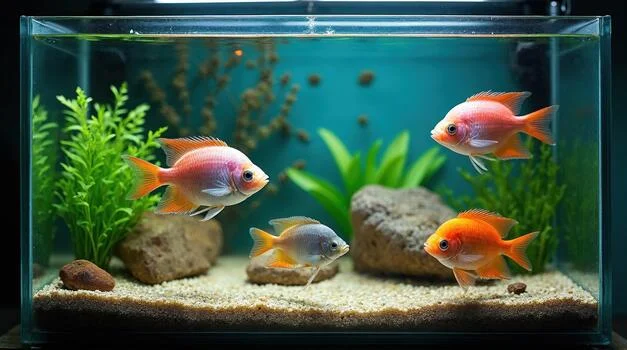

Most beginner fish guides are written as shopping lists. They rank fish by colour and availability, slap ‘easy care’ on everything, and send you to the pet store with confidence you have not earned yet.
This guide on best aquarium fish for beginners works differently. Every fish here is chosen on one criterion: does it actually survive beginner mistakes? That means new tanks with unstable nitrogen cycles, water changes that happen a day late, and the occasional overfeeding. A fish that looks hardy under a shop’s fluorescent lights is not the same as a fish that will still be alive three months into your first aquarium.
The guide covers twelve freshwater species, five saltwater species, tank size recommendations, community compatibility, and — just as importantly — five fish that regularly appear on beginner lists but should not be there.
Also Explore: “Best Hotels in Lahore (2026): Luxury, Mid-Range & Budget Guide with Prices“
What Makes a Fish Actually Beginner-Friendly?
The ‘easy care’ label on a pet shop tank means almost nothing. It usually refers to feeding behaviour and ambient temperature tolerance, not what actually determines whether a beginner succeeds. A genuinely beginner-friendly fish has four real qualities:
- Tolerates unstable water chemistry. New tanks go through a nitrogen cycle that can take four to eight weeks to stabilise. A beginner fish needs to survive ammonia and nitrite spikes that would kill more sensitive species.
- Accepts a wide temperature range. Heater malfunctions happen. Power cuts happen. A fish that can tolerate 65°F to 82°F without crisis is a fish that forgives equipment failures.
- Eats commercial food reliably. A fish that needs live food or specific dietary supplements is not a beginner fish, regardless of what the label says. Every fish on this list eats standard flakes, pellets, or a simple combination of both.
- Stays peaceful in a community — or is designed for solo keeping. Unexpected aggression is one of the top reasons beginners lose fish. Every fish here either integrates peacefully into a community tank or has clearly defined solo requirements that prevent surprises.
One more thing worth stating upfront: the nitrogen cycle is not optional. It is the single most important concept for any new aquarist, and it is covered in the setup section at the end of this guide. If you are setting up your first tank, read that section before buying any fish.
Best Freshwater Fish for Beginners
Freshwater is the right starting point for almost every new aquarist. The chemistry is more forgiving than saltwater, the equipment cost is lower, and the range of fish available is enormous. These twelve species are the most reliably beginner-friendly freshwater fish available in 2026.
Guppies — Best Overall Beginner Freshwater Fish
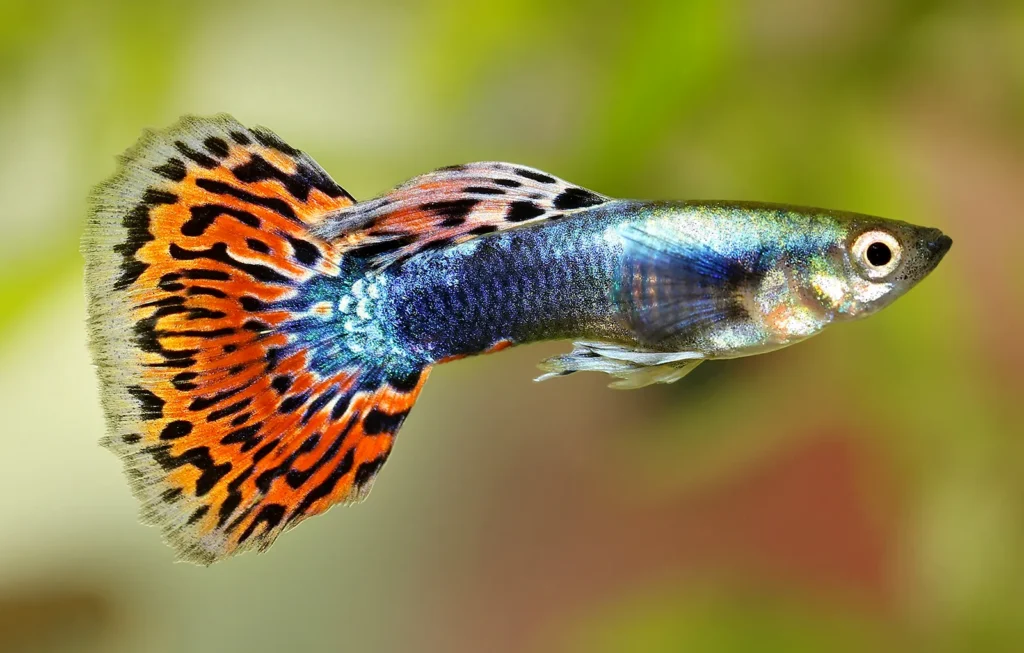
Guppies are the default recommendation for first-time fish keepers, and the reputation is earned. They are colourful, active, forgiving of water quality fluctuations, and they have more personality than most fish twice their size. They rush to the front of the tank at feeding time and interact with their keeper in a way that makes the hobby feel immediately rewarding.
The one complication: guppies breed. If you keep males and females together, you will have fry within weeks. The easiest solution for a first tank is an all-male group of three to six fish — you get the colour variety without the population explosion. Common fancy tail guppies (Poecilia reticulata) are the most forgiving variety and the best choice for a first tank.
- Tank size: 5 gallons minimum | Temperature: 72–82°F | pH: 7.0–7.2
- Group size: 3 or more — single-sex groups are simplest for beginners
- Feed: quality flake food with occasional frozen daphnia or brine shrimp
- Best for: first fish ever, children, nano tanks, anyone who wants colour immediately
Betta Fish — Best Single Fish for a Small Tank
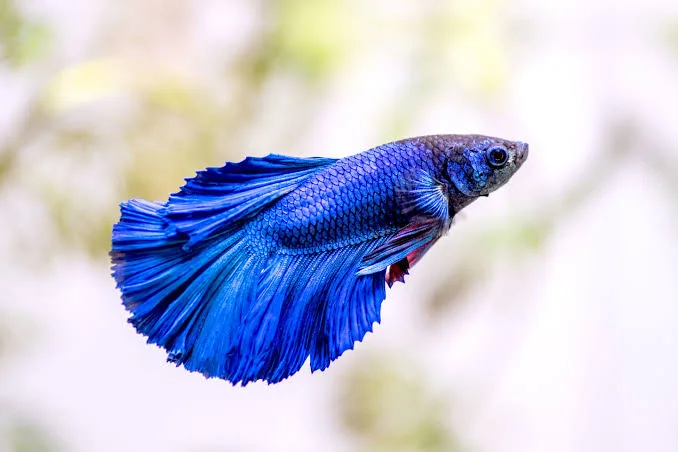
A betta is the right answer when someone wants one fish, in a small tank, with maximum personality. They are described by every experienced fishkeeper who recommends them the same way: they have personality. A betta recognises its keeper, reacts to movement outside the tank, and displays its best colours when it is comfortable and well-fed.
The rules are simple and non-negotiable: only one male per tank. Males will fight to the death. A single male can be kept with peaceful community fish in a tank large enough to provide visual separation, but in a 5 to 10 gallon setup, a betta does best alone. A filter and heater are not optional despite what some sellers imply — a betta kept without a heater in an unheated room will slowly decline.
- Tank size: 5 gallons minimum — bigger is better
- Temperature: 76–82°F — heater is mandatory
- Compatibility: solo male, or with peaceful non-fin-nipping community fish in 15+ gallon tanks
- Labyrinth organ: bettas can breathe atmospheric air — this does not mean they can live without a filter
- Best for: solo nano tank, children wanting ‘their’ fish, anyone who cannot maintain a community setup
Neon Tetra — Best Schooling Fish for Beginners
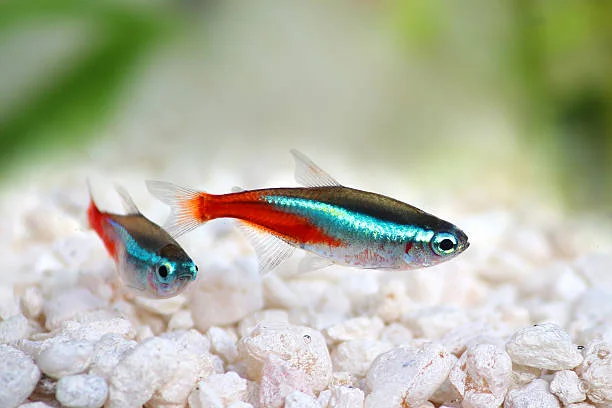
Neon tetras are the most visually striking beginner fish in freshwater aquariums. The iridescent blue and red stripe is one of the most recognisable sights in the hobby. In a school of ten or more in a planted tank, they are genuinely impressive.
The important caveat: neon tetras are hardy once established in a mature tank, but they do not handle new tank syndrome well. Do not add them to a tank that has not completed its nitrogen cycle. Add them after hardier fish like zebra danios or guppies have been running in the tank for four to six weeks. This single rule prevents most neon tetra losses in beginner tanks.
- Tank size: 10 gallons minimum | Temperature: 72–78°F | pH: 6.0–7.0
- School size: 6 minimum, 10+ for best display
- Key rule: only add to a cycled, mature tank — not a new setup
- Best for: community tanks, visual impact, planted aquariums
Zebra Danio — Most Forgiving Beginner Fish
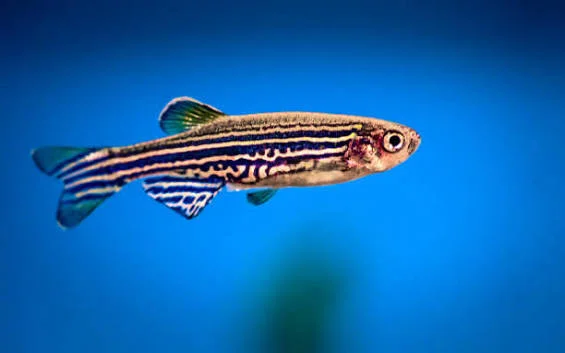
If neon tetras are the most visually rewarding beginner fish, zebra danios are the most forgiving. They tolerate the widest temperature range of any common aquarium fish (65°F to 77°F), survive the nitrogen cycle better than virtually any other species, and stay active and visible throughout the day.
Zebra danios are the fish to put in a new tank first. They help establish the biological filtration that every tank needs before other fish can be safely added. Once the tank is cycled, they integrate peacefully into most community setups — though they will occasionally chase smaller or slower fish, so pair them with fish of similar size and speed.
- Tank size: 10 gallons minimum | Temperature: 65–77°F | pH: 6.5–7.2
- School size: 5+ — danios are schooling fish and do noticeably better in groups
- Key use: put these in first when cycling a new tank
- Cover: they jump — a tight-fitting lid is essential
- Best for: new tank cycling, cold-water or unheated rooms, active community tanks
Platy — Best Hardy Livebearer for Community Tanks
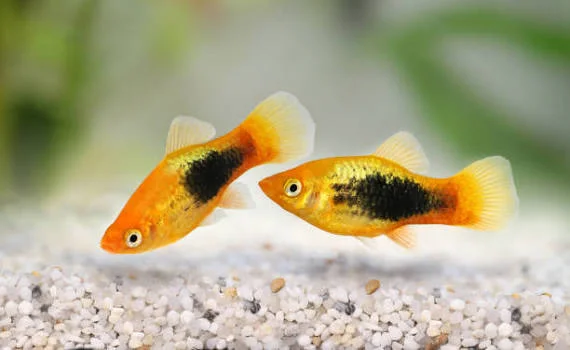
Platys are recommended as a step up from guppies by experienced hobbyists — slightly larger, equally colourful, and available in dozens of colour and pattern combinations. They tolerate a wide range of water conditions including the harder, more alkaline water that comes out of many household taps.
Like guppies, platys are livebearers and breed readily. An all-male group is the simplest approach for a first tank. Common platys (Xiphophorus maculatus) are hardier and more predictable than hybrid varieties — stick with these for your first tank.
- Tank size: 10 gallons minimum | Temperature: 70–77°F | pH: 7.0–8.3
- Avoid: balloon platys and heavily hybrid varieties — lower disease resistance
- Best for: community tanks, beginners who want colour variety without guppy-level breeding
Molly — Best Active Livebearer for Beginners
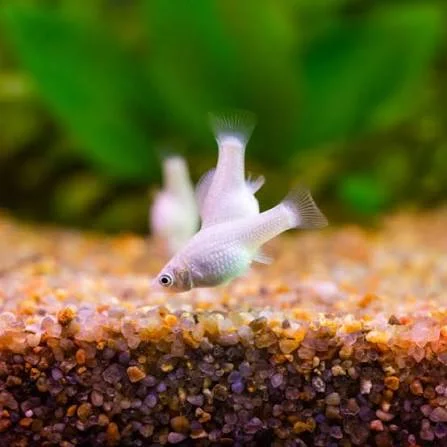
Mollies are larger and more active than guppies or platys, which makes them visually engaging in a community tank. They are tolerant of a wide range of conditions and recover well from minor water quality mistakes once a tank is established.
One genuine consideration: mollies prefer slightly hard, alkaline water. Many beginners have soft water from the tap, which mollies can struggle with long-term. Check your local water hardness before choosing mollies as a centrepiece species. Short-finned, natural-bodied common mollies (Poecilia sphenops) are significantly hardier than balloon mollies — avoid the balloon variety entirely for a first tank.
- Tank size: 10 gallons minimum | Temperature: 72–78°F | pH: 7.5–8.5
- Water: prefer hard, alkaline water — check your tap parameters first
- Avoid: balloon mollies and sailfin varieties in tanks under 20 gallons
- Best for: active community tanks, beginners with naturally hard tap water
Corydoras Catfish — Best Bottom Dweller for Beginners
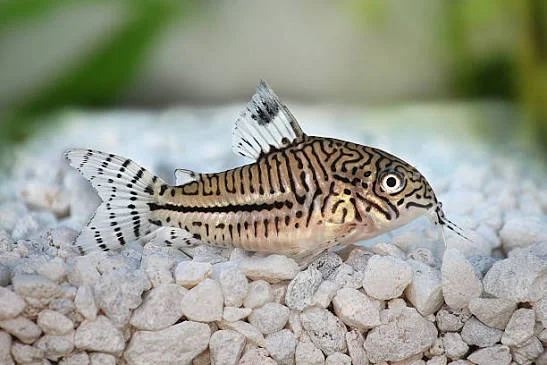
Corydoras are the bottom layer of most successful beginner community tanks. They are peaceful, curious, and surprisingly active for a bottom-dwelling fish — a group of six corys busily foraging across the substrate is one of the more entertaining sights in a community tank. They also serve a practical function: they eat leftover food that sinks to the bottom before it can decompose and affect water quality.
Keep corydoras on sand or smooth rounded gravel — sharp substrate damages their sensitive barbels around the mouth. Feed them specifically with sinking wafers or pellets rather than depending on scraps from surface feeding. Sterbai and panda corydoras are among the most beginner-friendly species.
- Tank size: 10 gallons minimum | Temperature: 72–78°F | pH: 7.0–7.8
- Group size: 3 minimum, 6 preferred — they are social and do visibly better in groups
- Substrate: sand or smooth rounded gravel only — sharp substrate damages barbels
- Feed: sinking wafers or pellets directed at them — do not rely on scraps
- Best for: any community tank as the bottom layer, algae and waste management
Bristlenose Pleco — Best Algae Eater for Beginners
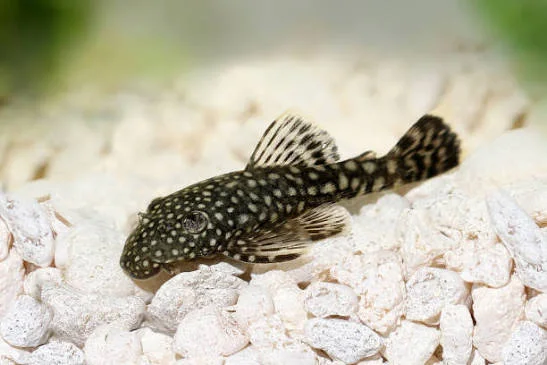
The common pleco (Hypostomus plecostomus) is sold in almost every pet shop and recommended constantly to beginners. It is a mistake. Common plecos grow to 18 inches or more and produce enormous amounts of waste. The bristlenose pleco (Ancistrus sp.) is the correct choice: it stays under 5 inches, does an excellent job controlling algae, and has a personality that endears it to everyone who keeps one.
Bristlenose plecos are more nocturnal than other community fish, but they will emerge during the day for algae wafers and fresh vegetables. Provide driftwood in the tank — they rasp on it for fibre and use it as a hiding place. They are peaceful with virtually everything except other bristlenose males.
- Tank size: 20 gallons minimum | Temperature: 73–81°F | pH: 6.5–7.5
- Provide: driftwood, algae wafers, fresh vegetables (zucchini, cucumber)
- One male per tank — males are territorial with each other
- Best for: algae control in any community tank, anyone sold a common pleco who now knows better
Dwarf Gourami — Best Mid-Tank Showpiece for Beginners
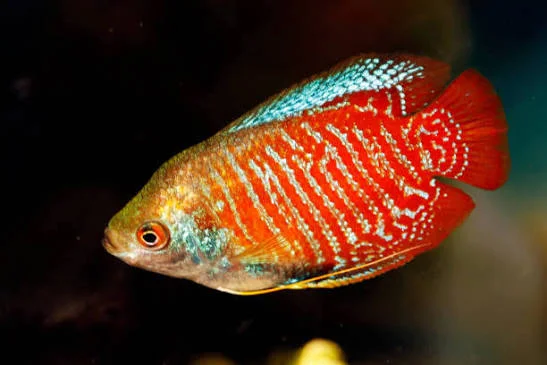
Dwarf gouramis are the most visually striking beginner-friendly fish in freshwater. The powder-blue body with flame-red striping cruises the upper and middle water column in a way that draws attention from anywhere in a room. For a single showpiece fish in a peaceful community setup, nothing competes at this price point.
One practical note: dwarf gouramis can be aggressive toward smaller or similarly coloured fish, and males are territorial with each other. Keep one per tank unless the setup is large enough (30+ gallons) to break line of sight. They are also slightly more sensitive to water quality than guppies or danios — do not add them to a new or unstable tank.
- Tank size: 10 gallons minimum | Temperature: 77–78°F | pH: 6.0–7.5
- Keep: one male per tank in most setups
- Sensitivity: more sensitive to water quality than other beginner fish — add to an established tank
- Best for: visual centrepiece in a peaceful community tank
Harlequin Rasbora — Best Peaceful Schooling Fish for Small Tanks
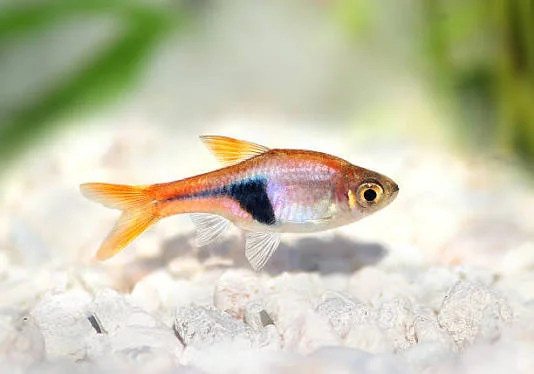
Harlequin rasboras are among the most reliably peaceful community fish available. They do not nip, do not harass, and do not compete aggressively for territory. In a school of eight or more they move as a coordinated group, which is one of the most calming sights in a home aquarium.
They are small — under 2 inches — which makes them ideal for 10 to 20 gallon community tanks where larger schooling fish would feel crowded. The copper body with black triangular patch is not as dramatic as neon tetras but ages better — rasboras look good in any planted aquarium without dominating it.
- Tank size: 10 gallons minimum | Temperature: 72–77°F | pH: 6.0–7.8
- School size: 8+ for best display | peaceful with virtually all community fish
- Best for: planted community tanks, peaceful setups with bettas or gouramis
Cherry Barb — Best Colourful Low-Maintenance Fish
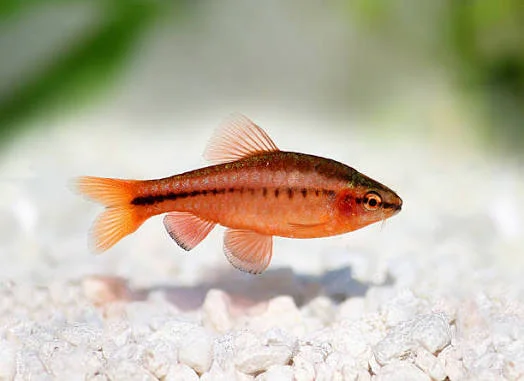
Cherry barbs are underrated in beginner guides. Males are a vivid cherry-red, females a warm bronze — the colour contrast in a mixed group in a planted tank is striking. They are hardy, peaceful (unlike tiger barbs, which are not recommended for beginners), and easy to feed. A group of six in a 10-gallon tank with some plant cover is one of the simpler ways to have a good-looking first aquarium.
- Tank size: 10 gallons minimum | Temperature: 73–81°F | pH: 6.0–8.0
- Group: 6+ with 1 male to 2 females ratio for best colour display
- Best for: beginners who want barb colour without tiger barb aggression
Swordtail — Best Beginner Fish for Larger Community Tanks
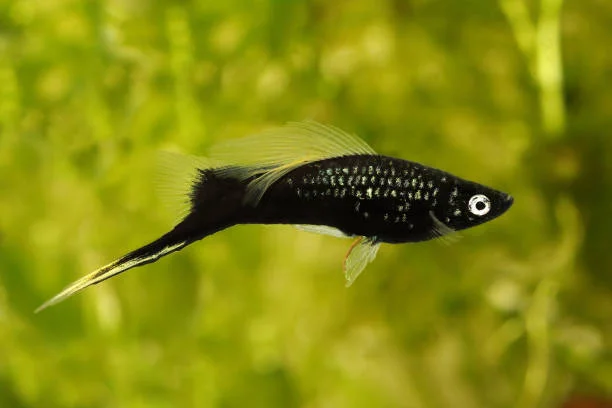
Swordtails are the largest common livebearer and the right choice when a 20-gallon or larger community tank has room for a more visually substantial fish. The elongated tail fin on males is distinctive and the range of colour varieties — red, black, pineapple, koi — makes them one of the more visually flexible livebearer options.
Like all livebearers, swordtails breed readily. Male swordtails can also occasionally be aggressive toward each other — keep one male with two or more females, or an all-male group in a larger tank.
- Tank size: 20 gallons minimum | Temperature: 65–82°F | pH: 7.0–8.4
- Ratio: 1 male to 2+ females, or all-male group to avoid breeding
- Best for: 20+ gallon community tanks, beginners wanting a larger centrepiece livebearer
Best Saltwater Fish for Beginners
Saltwater aquariums are more demanding than freshwater — the chemistry is less forgiving, the equipment cost is higher, and the species selection requires more research. But the barrier to entry is lower than it was five years ago. Captive-bred fish, better filtration technology, and widely available reef testing kits have made starting a marine tank genuinely achievable for a patient beginner.
The key word is patient. Cycle a saltwater tank for six to eight weeks before adding any fish. Never rush stocking. The five species below are the most beginner-friendly saltwater fish available in 2026 — all are widely available as captive-bred specimens, which significantly increases survival rates over wild-caught fish.
Clownfish — Best Overall Beginner Saltwater Fish
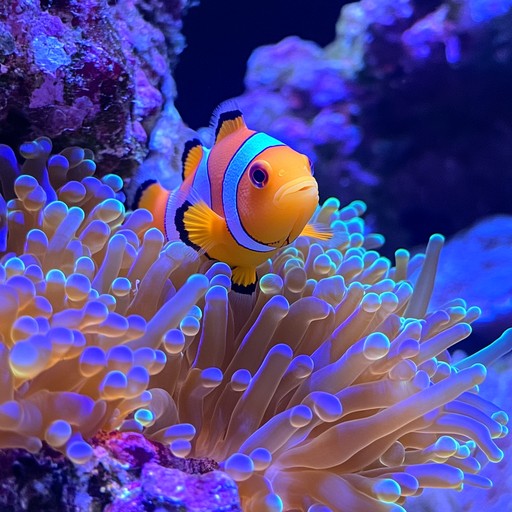
Clownfish are to saltwater what guppies are to freshwater: the default recommendation, and deservedly so. Captive-bred clownfish are adapted to aquarium life from birth — they accept prepared foods, tolerate standard reef conditions, and do not require a host anemone (though they will use one if available). They are active, visible throughout the day, and one of the few saltwater fish that actively interacts with its keeper.
Ocellaris clownfish (Amphiprion ocellaris) are the most beginner-friendly variety — hardier and less aggressive than their near-identical relative the true percula clownfish. Always buy captive-bred; wild-caught clownfish are significantly harder to establish in a home aquarium.
- Tank size: 30 gallons minimum | Temperature: 75–82°F | Salinity: 1.020–1.025
- pH: 8.1–8.4 | Always buy captive-bred — wild-caught survival rates are much lower
- Keep: a mated pair or a single fish — groups require careful management
- Best for: first saltwater fish, reef tanks, anyone drawn to the hobby by Finding Nemo
Green Chromis — Best Schooling Saltwater Fish for Beginners
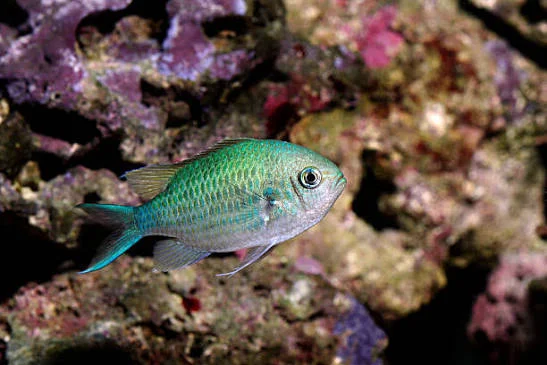
Green chromis are the freshwater equivalent of zebra danios for saltwater: hardy, active, visually interesting in a group, and tolerant enough of imperfect conditions to survive the early stages of a new marine setup. A school of five to seven in a reef tank adds constant movement and a shimmer of electric blue-green that photographs beautifully.
- Tank size: 30 gallons minimum | Temperature: 72–82°F | School size: 5–7
- Note: establish a pecking order in the group — occasional aggression between individuals is normal
- Best for: adding schooling movement to a reef tank, cycling support in a new marine setup
Firefish Goby — Best Peaceful Nano Saltwater Fish
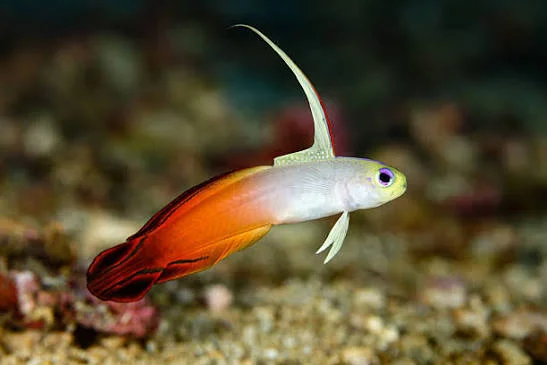
Firefish gobies are one of the few saltwater fish suitable for a nano reef of 10 to 20 gallons. The white to yellow body transitioning to a vivid red-orange rear half is striking in a small tank. They are peaceful, reef-safe, and easy to feed on frozen mysis and prepared marine foods.
One important behaviour: firefish are jumpers. A tight-fitting cover is non-negotiable. They are also shy — provide plenty of rock caves and crevices for retreat. A firefish that feels exposed in an open tank will eventually jump.
- Tank size: 10 gallons minimum | Temperature: 72–80°F | pH: 8.1–8.4
- Essential: tight-fitting lid — firefish jump when startled
- Best for: nano reef tanks, peaceful community marine setups
Damselfish — Hardiest Saltwater Fish but Read This First
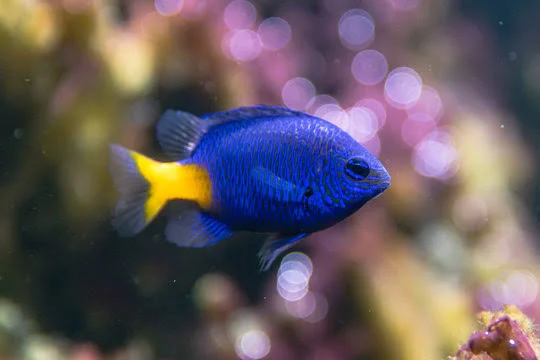
Damselfish are extraordinarily hardy — they are often used to cycle new marine tanks because they can survive conditions that would kill almost anything else. This is also why they appear on almost every beginner saltwater list. The problem: most damselfish species become highly aggressive as they mature and will terrorise tankmates they initially tolerated.
If you use damselfish to cycle a tank, have a plan for rehoming them before you add other fish. Three-stripe damselfish (Dascyllus aruanus) and blue-green chromis are the least aggressive varieties. Azure damselfish are among the most aggressive and should be avoided entirely.
- Tank size: 30 gallons minimum | Temperature: 72–82°F | pH: 8.1–8.4
- Use case: tank cycling only — plan to rehome before adding other fish
- Avoid: blue devil damselfish and azure damselfish — aggression too high for community tanks
Royal Gramma — Best Colourful Beginner Reef Fish
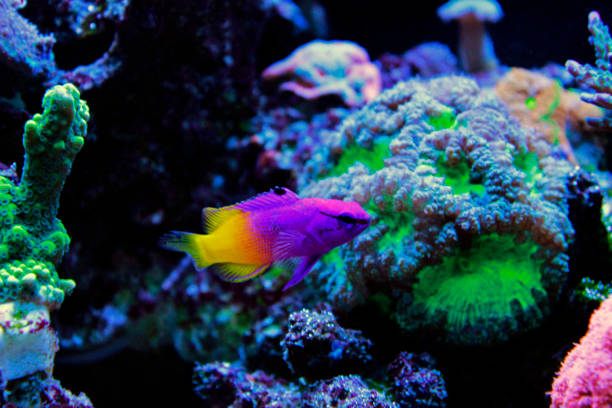
Royal grammas combine beginner hardiness with genuinely striking colouration — the vivid purple front half transitioning to bright yellow at the tail is one of the most eye-catching patterns in the marine hobby. They are reef-safe, peaceful with most tankmates, easy to feed, and tolerant of the water quality variations common in newer marine setups.
- Tank size: 30 gallons minimum | Temperature: 72–78°F | pH: 8.1–8.4
- One per tank — territorial with conspecifics in smaller setups
- Best for: colour impact in a beginner reef tank, peaceful community marine setups
Best Beginner Fish by Tank Size
Tank size is the most practical filter for a beginner fish choice. Here are the best species for each common starter tank size:
Best Fish for a 5-Gallon Tank
A 5-gallon tank is a nano setup. It is not a goldfish bowl and it is not suitable for most community fish. The options are limited but good:
- Betta fish (solo male) — the ideal 5-gallon fish. One male, a filter, a heater, and you have a complete setup.
- Guppies (3 males) — a small all-male trio works well in a 5-gallon. Do not add females.
- Firefish Goby (saltwater) — the only saltwater fish suitable for a 10-gallon nano; workable in 5 with very stable water management.
What to avoid in a 5-gallon: schooling fish that need groups of 6+, any fish over 2 inches, goldfish, and anything described as ‘grows with the tank.’
Best Fish for a 10-Gallon Tank
A 10-gallon is the most common starter tank and the most versatile beginner setup. The range of options opens significantly:
- Community option: 6 harlequin rasboras + 4 corydoras — a complete, peaceful community with top-to-bottom coverage.
- Schooling colour option: 8 neon tetras + 4 corydoras — classic beginner setup, high visual impact.
- Active option: 6 zebra danios + 1 bristlenose pleco — hardy, fast, and good for watching.
- Livebearer option: 6 guppies (male only) or 6 platies (male only) — simple, colourful, no breeding management.
- Showpiece option: 1 dwarf gourami + 6 harlequin rasboras + 4 corydoras.
Best Fish for a 20-Gallon Tank
A 20-gallon tank opens the door to larger schooling groups and more diverse community compositions:
- Best community starter: 10 neon tetras + 6 corydoras + 1 dwarf gourami — three species, three tank layers, maximum visual interest.
- Livebearer community: 6 platies + 6 mollies + 4 corydoras — active, colourful, easy care.
- Barb community: 8 cherry barbs + 6 harlequin rasboras + 1 bristlenose pleco.
- Swordtail community: 4 swordtails + 6 zebra danios + 4 corydoras.
Best Fish for a 30-Gallon Tank and Above
A 30-gallon tank is where saltwater becomes genuinely achievable for a patient beginner, and where freshwater community setups can include larger or more complex species:
- Saltwater starter: 1 pair clownfish + 5 green chromis + 1 royal gramma — a complete, balanced beginner reef community.
- Freshwater community: 12 neon tetras + 8 harlequin rasboras + 6 corydoras + 1 bristlenose pleco + 1 dwarf gourami.
- Swordtail showcase: 6 swordtails (1 male, 5 female) + 8 cherry barbs + 6 corydoras.
Best Community Tank Fish for Beginners
A community tank works best when fish occupy different water column layers. Competing for the same space causes stress, territory disputes, and higher disease rates. The simplest way to build a beginner community is to choose one species per layer:
Top Layer Fish: Best Surface Swimmers for Community Tanks
These fish spend most of their time near the surface and rarely compete with mid-tank or bottom-dwelling species:
- Guppies — naturally surface-oriented, especially at feeding time.
- Swordtails — cruise the upper half of the tank.
- Betta fish — labyrinth organ means they surface regularly to breathe.
- Dwarf gouramis — primarily upper and middle layer.
Also Explore: “12 Best Swimming Pools in Karachi: Prices, Locations & Reviews“
Middle Layer Fish: Best Mid-Tank Swimmers for Community Tanks
The most visually active zone — most schooling fish occupy this layer:
- Neon tetras — classic mid-tank schooling fish.
- Harlequin rasboras — peaceful schooling, mid-tank position.
- Cherry barbs — mid-tank, spread across the whole water column.
- Zebra danios — active mid-to-upper layer, constant movement.
- Platys and mollies — mid-tank generalists.
Also Explore: “11 Best Swimming Pools in Lahore for 2026 (Tested & Reviewed)“
Bottom Layer Fish: Best Bottom Dwellers for Community Tanks
These species complete a community tank by occupying the substrate zone that schooling fish avoid:
- Corydoras catfish — the standard beginner bottom dweller. Peaceful, active, practical.
- Bristlenose pleco — nocturnal, algae-focused, peaceful.
- Kuhli loach — eel-like, substrate-dwelling, surprisingly beginner-friendly in groups of 4+.
Fish to Avoid as a Beginner
These five species appear regularly on beginner lists, in pet shop recommended sections, and in well-meaning advice online. All five are mistakes for a first tank. Understanding why helps you make better choices throughout the hobby.
Common Pleco — Gets Too Large for Most Beginner Tanks
The common pleco (Hypostomus plecostomus) is sold constantly as an algae cleaner for beginner tanks. It grows to 18 to 24 inches. In the wild it lives in large river systems. In a 20 to 30 gallon beginner tank it will outgrow the space within 18 months and produce more waste than its entire tankmate population combined. Get a bristlenose pleco instead. It stays under 5 inches, does the same job, and will not eventually require rehoming to a public aquarium.
Oscar — Aggressive, Large, and a High Waste Producer
Oscars are fascinating fish with real personality. They are also aggressive, grow to 12 to 14 inches, require a 75-gallon minimum tank as adults, and produce so much waste that maintaining water quality becomes a significant challenge. No beginner should start with an oscar. They appear on some beginner lists because they are hardy and interactive — both true — but hardiness does not compensate for the care demands at full size.
Goldfish in Tropical Tanks — Wrong Temperature Range
Goldfish are cold-water fish. They thrive at 65°F to 72°F. Every tropical community fish in this guide requires 72°F or above. Combining goldfish with tropical fish means one group is always at the wrong temperature, and goldfish produce disproportionate ammonia for their size which stresses water quality in community setups. Goldfish are excellent fish — in a cold-water tank designed for them.
Mandarin Dragonet — Stunning but Almost Impossible to Feed
The mandarin dragonet is one of the most visually spectacular fish in the marine hobby. It is also one of the hardest to keep alive. It subsists almost entirely on live copepods — tiny crustaceans that must be continuously replenished in the tank. Most home aquariums cannot sustain a copepod population large enough to keep a mandarin fed. Without live pods, mandarins starve slowly over weeks. Unless you have a large, heavily established reef system with a dedicated refugium and proven captive-bred specimens that have been trained to eat frozen food, avoid the mandarin dragonet.
Tiger Barbs in Community Tanks — Fin Nippers
Tiger barbs are attractive, active, and widely sold as community fish. They are also notorious fin nippers that target slow-moving fish with long fins — bettas, gouramis, angelfish, and guppies. In a single-species group of 8 or more they direct aggression at each other rather than tankmates, but this requires a dedicated tiger barb tank. In a mixed community tank they cause consistent damage. Do not mix tiger barbs with any fin-heavy or slow-moving species.
Quick Comparison Table: Best Beginner Aquarium Fish 2026
| Fish | Min Tank | Temp (°F) | pH | Community Safe | Schooling | Difficulty | Best For |
| Guppy | 5 gal | 72–82 | 7.0–7.2 | Yes | No (groups ok) | Easy | First fish ever |
| Betta Fish | 5 gal | 76–82 | 6.5–7.5 | Solo male | No | Easy | Solo nano tank |
| Neon Tetra | 10 gal | 72–78 | 6.0–7.0 | Yes | Yes (6+) | Easy–Moderate | Schooling colour |
| Zebra Danio | 10 gal | 65–77 | 6.5–7.2 | Yes | Yes (5+) | Very Easy | Cycling a new tank |
| Platy | 10 gal | 70–77 | 7.0–8.3 | Yes | No | Easy | Hardy livebearer |
| Molly | 10 gal | 72–78 | 7.5–8.5 | Yes | No | Easy | Active community |
| Corydoras Catfish | 10 gal | 72–78 | 7.0–7.8 | Yes | Yes (3–6) | Easy | Bottom cleaning |
| Bristlenose Pleco | 20 gal | 73–81 | 6.5–7.5 | Yes | No | Easy | Algae control |
| Dwarf Gourami | 10 gal | 77–78 | 6.0–7.5 | Yes (solo) | No | Easy–Moderate | Mid-tank showpiece |
| Harlequin Rasbora | 10 gal | 72–77 | 6.0–7.8 | Yes | Yes (8+) | Easy | Small community |
| Cherry Barb | 10 gal | 73–81 | 6.0–8.0 | Yes | Yes (6+) | Easy | Colour + hardy |
| Swordtail | 20 gal | 65–82 | 7.0–8.4 | Yes | No | Easy | Larger community |
| Clownfish | 30 gal | 75–82 | 8.1–8.4 | Yes | Pair | Easy (saltwater) | First reef fish |
| Green Chromis | 30 gal | 72–82 | 8.1–8.4 | Yes | Yes (5+) | Easy (saltwater) | Reef schooling |
| Firefish Goby | 10 gal | 72–80 | 8.1–8.4 | Yes | Pair/solo | Easy (saltwater) | Nano reef |
| Royal Gramma | 30 gal | 72–78 | 8.1–8.4 | Yes | No | Easy (saltwater) | Colour in reef |
Temperature ranges are Fahrenheit. ‘Community Safe’ assumes appropriate tank size and compatible tankmates. Schooling fish require minimum group sizes as noted in individual sections.
Beginner Aquarium Setup Guide: What Your Fish Actually Need
The right fish in a wrong setup will still die. These three concepts determine whether a beginner tank succeeds:
The Nitrogen Cycle: Why It Matters Before You Add Any Fish
Fish produce ammonia as waste. Ammonia is toxic. In a cycled aquarium, beneficial bacteria convert ammonia to nitrite (also toxic), then to nitrate (far less toxic), which is removed through regular water changes. This process takes four to eight weeks to establish in a new tank. Adding fish before this cycle completes — ‘new tank syndrome’ — is the single most common cause of beginner fish deaths.
How to cycle a tank before adding fish:
- Add an ammonia source (a small pinch of fish food, or pure ammonia drops) to the empty tank daily for four to six weeks
- Test ammonia, nitrite, and nitrate weekly with an API Master Test Kit or equivalent
- The cycle is complete when ammonia and nitrite both read zero and nitrate is present
- Or use zebra danios — they are hardy enough to survive the cycling process and establish the biological filtration for other fish to follow
- Bottled beneficial bacteria products (Seachem Stability, API Quick Start) can speed the process — they work best combined with patience rather than as a shortcut
Water Temperature, pH, and Parameters by Fish Species
Do not choose fish and then buy a heater. Choose your fish first, then buy equipment to match their requirements. Most tropical freshwater community fish share an overlapping comfort range of 74°F to 78°F and pH 6.5 to 7.5 — a heater set to 76°F and dechlorinated tap water in this pH range supports virtually every freshwater species in this guide.
For saltwater: a stable salinity of 1.023 to 1.025, temperature of 76°F to 78°F, pH of 8.1 to 8.4, and alkalinity of 8 to 12 dKH are the parameters to maintain. Test weekly. Consistency matters more than perfection.
How Many Fish Can You Put in a Beginner Tank?
The traditional rule is one inch of fish per gallon of water. It is a reasonable starting point but not a precise formula. A better frame: stock conservatively, watch the water parameters weekly, and only add more fish when ammonia and nitrite remain at zero for at least two weeks after the previous addition.
Beginners almost always overstock. The consequences — ammonia spikes, disease outbreaks, stressed fish — take weeks to appear and months to correct. Start with half the fish you think the tank can hold. You can always add more.
Which Beginner Fish Should You Start With? Decision Guide
- First fish ever, smallest tank: A single male betta in a 5-gallon heated tank
- First community tank, 10 gallon: 6 guppies (male only) + 4 corydoras
- Best visual impact, 10 gallon: 8 neon tetras (add to cycled tank only) + 4 corydoras
- Best for children: Guppies — interactive, colourful, forgiving
- Most forgiving for a new tank: Zebra danios — put these in first
- Best complete community, 20 gallon: Dwarf gourami + 8 harlequin rasboras + 6 corydoras + 1 bristlenose pleco
- First saltwater fish: A pair of captive-bred clownfish — nothing else until the tank is fully established
- Best single colourful fish: Betta (freshwater) or Royal Gramma (saltwater)
- Best algae control: Bristlenose pleco — not common pleco, ever
Whatever you choose: cycle the tank first, stock slowly, test the water weekly for the first three months, and do not trust any fish labelled ‘easy’ without reading what ‘easy’ actually means for that species.
FAQs: Best Aquarium Fish for Beginners
What is the easiest fish to keep in an aquarium?
Zebra danios are the hardiest and most forgiving freshwater fish available — they tolerate the widest temperature range, survive the nitrogen cycle, and recover from minor water quality mistakes better than any other common aquarium fish. For a single fish in a small tank, a male betta is the easiest complete setup. For saltwater, captive-bred clownfish are the most beginner-forgiving marine species.
What is the best fish for a beginner’s first tank?
For a first tank of any size: a single male betta if you want one fish in a small setup, or guppies (male only group) if you want a small community. Both are colourful, interactive, and tolerant of the inevitable mistakes that come with learning how to maintain an aquarium. Add zebra danios to cycle a new community tank before any other species.
What fish can live together in a beginner tank?
The most reliable beginner community combinations: neon tetras or harlequin rasboras (middle layer) + corydoras catfish (bottom layer) + one dwarf gourami (upper layer showpiece). Platies and mollies work well together as a livebearer community. Guppies, cherry barbs, and corydoras are compatible. Avoid combining bettas with fin-nipping species (tiger barbs), and avoid adding fish with very different temperature requirements in the same tank.
How many fish should a beginner start with?
Stock at half the capacity you think the tank can hold, then wait two weeks before adding more. For a 10-gallon tank: start with 6 fish maximum. For a 20-gallon: 10 to 12. For a 30-gallon: 15 to 18. Test ammonia and nitrite weekly. Only add more fish when both read zero consistently. Beginners who overstock lose fish and get discouraged. Beginners who understock learn how the tank works and have more success.
Are guppies or bettas better for beginners?
Different questions, different answers. A betta is better if you want one fish in a small tank with maximum personality and visual impact. Guppies are better if you want a group of fish in a community setup, want to see schooling behaviour, or are setting up a tank for children who enjoy watching multiple fish interact. Guppies require a group; bettas work as soloists. Both are excellent beginner fish — the choice depends on the tank size and what you want to watch.
What is the hardiest aquarium fish for beginners?
Zebra danios. They tolerate temperatures from 65°F to 77°F, survive new tank syndrome better than any other common species, accept almost any food, and do not require a heater in a typical household environment. They are not the most visually striking fish, but they are the most likely to still be alive six months into a beginner’s first tank. For saltwater, green chromis and damselfish are the hardiest marine species, though damselfish aggression makes chromis the better long-term choice.
Can beginners keep saltwater fish?
Yes — with the right expectations. Saltwater requires more equipment (protein skimmer, live rock, higher-quality test kits), more patience during cycling (six to eight weeks minimum), and more consistent water parameter management than freshwater. The rewards are significant: marine fish and reef environments are among the most visually spectacular setups in the hobby. Start with a 30-gallon tank, a pair of captive-bred clownfish, and nothing else until the tank is fully established. Do not rush. Every experienced marine aquarist who succeeded started slowly.