
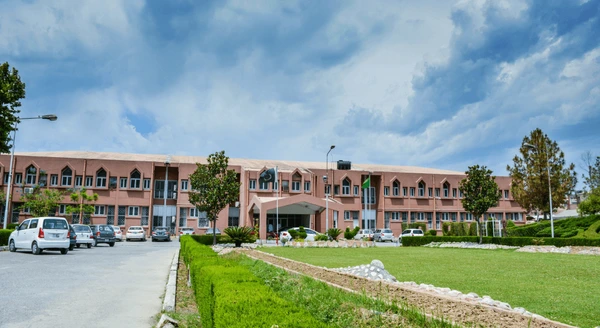

Choosing among the best medical universities in Pakistan is no small feat when acceptance rates at prestigious institutions often fall below 2%. Pakistan’s medical education infrastructure includes 176 medical universities serving a population of over 250 million people. We’ve compiled this guide to help you understand the top medical universities in Pakistan, particularly the 12 best medical colleges in Pakistan for 2026. You’ll find detailed information about each institution’s admission requirements, fee structures, and what sets the top medical colleges in Pakistan apart from the rest.
Also Explore: “Assistant Commissioner Salary in Pakistan (BPS-17 Pay Scale)“
Overview of Medical Degree Programs (MBBS, BDS, etc.)
Medical education in Pakistan operates through institutions commonly referred to as medical colleges rather than medical schools. These colleges function as university-affiliated departments, typically maintaining separate campuses. As per the Pakistan Medical and Dental Council database from 2021, the country hosts , alongside 17 public sector and 42 private sector dental colleges.45 public sector and 72 private sector medical colleges
The Bachelor of Medicine and Bachelor of Surgery (MBBS) remains the primary medical qualification, spanning five years of theoretical and practical clinical training. Students complete their education in medical colleges and affiliated teaching hospitals before receiving their degree. The curriculum design falls under the Pakistan Medical Commission’s jurisdiction, ensuring standardized education across all institutions regardless of regional location or university affiliation. The program emphasizes problem-based learning with early clinical contact, gradually shifting focus to patient-based learning using evidence-based practice in later years.
List of 12 Best Medical Universities in Pakistan
The following is a list of the top 12 medical universities in Pakistan, selected on the basis of their academic reputation, rankings, clinical training facilities, and contributions to the field of health sciences.
- King Edward Medical University, Lahore
- Aga Khan University, Karachi
- Army Medical College, Rawalpindi
- DOW University of Health Sciences, Karachi
- Rawalpindi Medical University, Rawalpindi
- Allama Iqbal Medical College, Lahore
- Jinnah Sindh Medical University, Karachi
- University of Health Sciences, Lahore
- Khyber Medical University, Peshawar
- Ziauddin University, Karachi
- Fatima Jinnah Medical University, Lahore
- Shifa College of Medicine, Islamabad
These institutions collectively represent the backbone of medical education in Pakistan, offering programs ranging from MBBS and BDS to postgraduate and doctoral degrees across both public and private sectors.
1. King Edward Medical University, Lahore
Overview and Establishment
King Edward Medical University traces its roots to 1860 when it opened as Lahore Medical School near the artillery barracks. The institution holds the distinction of being the oldest medical institution in Pakistan and the fourth oldest in South Asia, following Medical College Kolkata, Madras Medical College, and Grant Medical College Bombay. The school underwent several transformations: operating as Lahore Medical College from 1886 to 1910, then renamed King Edward Medical College in 1911 following the death of King Edward. The Government of Punjab elevated it to university status on May 12, 2005
Key Features and Reputation
The university maintains a diverse student body with enrollment from Yemen, Iran, Afghanistan, Nepal, China, Bangladesh, Somalia, Sri Lanka, Turkey, Saudi Arabia, Germany, England, Canada, and USA. Current enrollment stands at 2,497 students across undergraduate programs, including 1,648 in MBBS, 383 in Allied Health Sciences, 226 in Doctor of Physiotherapy, and 240 in Vision Sciences. Postgraduate enrollment reaches 1,131 students across PhD, M.Phil, MD, MS, MDS, and fellowship programs.
The Quality Enhancement Cell secured scores exceeding 90.8% according to the Higher Education Commission’s assessment. Alumni total 18,485 from undergraduate programs and 438 from postgraduate programs, with graduates serving as teachers, physicians, surgeons, and research scholars across Pakistan and internationally.
Admission Procedure and Requirements
Students with top merit in MCAT examinations receive admission purely on merit basis. For Allied Health Sciences and Doctor of Physiotherapy programs, the aggregate formula calculates as: Matriculation × 10% + F.Sc. × 45% + MDCAT × 45%. MDCAT results remain valid for three years. The application fee amounts to Rs. 1,000 per program, submitted through the online admission system.
Fee Structure and Financial Aid
Tuition fees start from $200 USD for domestic students. Foreign nationals and overseas Pakistani candidates pay PKR 347,210 per year for Allied Health Sciences programs. Self-finance seats carry a fee of PKR 350,000 per year. The university offers talent-based, merit-based, and need-based scholarships to eligible students.
2. Aga Khan University, Karachi
Overview and Establishment
by His Highness the Aga Khan, Aga Khan University became Pakistan’s first private, not-for-profit university. The Medical College launched simultaneously in 1983 as part of the Faculty of Health Sciences. Subsequently, the institution expanded beyond Pakistan in 2000 to East Africa, followed by the United Kingdom and Afghanistan. The university now operates across six countries with over 2,300 students.
Key Features and Reputation
The Higher Education Commission ranked Aga Khan University as the top medical university in Pakistan for the fifth consecutive time. The institution secured third position overall among 136 public and private universities. Six out of Pakistan’s 10 most productive health researchers serve as AKU faculty members. The Aga Khan University Hospital became the first in Pakistan to meet accreditation standards of the U.S.-based Joint Commission International and the College of American Pathologists. Two-thirds of students and half of faculty members are women.
Admission Procedure and Requirements
Admissions for the 2026-2027 cycle close on May 13, 2026. The five-year MBBS program accepts academically qualified candidates without consideration to gender, religion, race, creed, color, or domicile. No quotas, reserved seats, or admissions against donations exist. Merit assessment includes scholastic achievements, performance on the AKU Admission Test, interviews, and experiences indicating leadership potential. Candidates who completed or are completing HSSC/graduate/postgraduate education in Summer 2026 may apply.
Fee Structure and Financial Aid
Admissions operate on a needs-blind basis, without considering financial background. Nearly 50% of the student body receives financial assistance. The university offers at least five full scholarships to MBBS students based on merit cum need. Financial aid combines grant-in-aid and interest-free student loans with an annual 5% administrative charge payable after graduation. In the School of Nursing and Midwifery, more than 89% of students study on financial assistance or merit-based scholarships.
3. Army Medical College, Rawalpindi
Overview and Establishment
The Pakistan Army’s Corps of Education established Army Medical College in 1977 as a residential institution for imparting undergraduate medical and dental education to cadets. Initially affiliated with the biology department of Quaid-i-Azam University for degree accreditation, the college transitioned to the National University of Sciences and Technology in 1998. Following another institutional shift in 2015, AMC became a constituent college of the National University of Medical Sciences, where it remains affiliated.
Key Features and Reputation
Army Medical College for its MBBS and BDS programs, securing first position among public sector medical colleges according to PM&DC assessments. The Pakistan Medical and Dental Council and the College of Physicians and Surgeons accredit degrees awarded by the institution. Clinical training occurs at Combined Military Hospital Rawalpindi and other affiliated military facilities, providing students exposure to diverse medical cases under supervision of experienced military and civilian consultants. scored A+ with 97.5%
Admission Procedure and Requirements
Admission operates through two distinct pathways: the Medical Cadet Course for military personnel and the NUMS entrance test for civilian students. However, starting academic year 2025-2026, civilian cadet seats for the MBBS degree department will no longer be available. Candidates must maintain at least 60% aggregate marks in FSc Pre-Medical with twelve years of education covering Biology, Chemistry, and Physics. Students must appear in the MDCAT administered by NUMS, requiring minimum scores of 55% for MBBS and 50% for BDS.
Fee Structure and Financial Aid
Tuition fees for open merit seats total PKR 1,210,000 annually for both MBBS and BDS programs. Local students under NUMS pay approximately PKR 220,000 per year. On-campus hostel facilities accommodate male and female students with charges ranging from PKR 25,000 to PKR 35,000 per semester, including mess facilities. The college supports students through merit-based and need-based scholarships offered in collaboration with NUMS, the Pakistan Army, and national funding bodies.
4.DOW University of Health Sciences, Karachi
Overview and Establishment
Dow Medical College was founded in 1945 and named after Sir Hugh Dow, then Governor of Sindh. It relocated from Hyderabad to Karachi in 1946 and passed through several university affiliations after independence. In December 2003, Dow University of Health Sciences was formally established as a university, with Dow Medical College as one of its constituent institutions.
Key Features and Reputation
The Higher Education Commission has ranked DUHS among the top medical schools in Pakistan for five consecutive years. The college has produced over 17,000 alumni globally and follows an integrated teaching approach combining theory with clinical practice across five years and ten semesters. Clinical training takes place at Civil Hospital Karachi and Dow University Hospital.
Admission Procedure and Requirements
Candidates must qualify the MDCAT conducted by DUHS for Sindh province. A minimum score of 55% is required for MBBS and 50% for BDS as per PM&DC guidelines. Merit is calculated on the basis of MDCAT score and FSc aggregate marks combined.
Fee Structure and Financial Aid
Annual tuition for open merit MBBS seats is approximately PKR 48,000, making DUHS one of the most affordable medical institutions in Pakistan. Additional charges include library, transport, and student activity fees, with tuition subject to a 10% annual increase. Merit-based and need-based scholarships are available to eligible students.
5. Rawalpindi Medical University, Rawalpindi
Overview and Establishment
Rawalpindi Medical College was established in Faisalabad, then shifted to Rawalpindi on November 5, 1974 in an incomplete building on Tipu Road. The institution initially affiliated with the University of the Punjab, Lahore, before transitioning to the University of Health Sciences in 2003. The Government of Punjab upgraded the college to university status in May 2017, renaming it Rawalpindi Medical University.
The university operates from two campuses: Tipu Road campus for basic sciences and Holy Family Hospital campus for clinical sciences. Three public sector hospitals provide clinical training: Holy Family Hospital, Benazir Bhutto Hospital, and District Headquarters Hospital, all located in Rawalpindi.
Key Features and Reputation
RMU has produced approximately 9,738 graduates, including over 700 foreign nationals from countries such as Afghanistan, Bangladesh, Egypt, Iraq, and Malaysia. Presently, 4,115 students are enrolled across various programs.
The university achieved 1st position in Punjab and Pakistan twice in the Times Higher Education Impact Rankings. In the 2025 THE Impact Rankings, RMU secured a position in the 601-800 band globally and ranked 1st in Punjab and 2nd among all medical universities in Pakistan.
Admission Procedure and Requirements
Admissions operate through the University of Health Sciences, Lahore merit system. Students must submit original documents including matriculation and F.Sc result cards, domicile certificate, entry test marks sheet, and character certificate. Additionally, a board migration certificate is required if the Board of Intermediate and Secondary Education is outside Punjab Province.
Fee Structure and Financial Aid
Tuition fees start from $1,000 USD for domestic students and $1,200 USD for international students. The university offers merit-based and need-based scholarships. For 2023-24, 159 students received organizational scholarships totaling PKR 22,765,984, while 142 students received government scholarships worth PKR 8,724,400.
6. Allama Iqbal Medical College, Lahore
Overview and Establishment
Operating under the motto “Dignity in Service,” Allama Iqbal Medical College as Lahore Medical College, inaugurated by Prime Minister Zulfikar Ali Bhutto. The first batch of 313 students began their academic journey on August 12, 1975. Initially housed in a borrowed building at the Post-Graduate Medical Institute with limited space requiring two teaching shifts, the institution was renamed Allama Iqbal Medical College two years later to commemorate the centenary of national poet Allama Muhammad Iqbal. President Ghulam Ishaq Khan inaugurated the permanent college complex on May 18, 1989. Subsequently, Jinnah Hospital was built as the dedicated teaching hospital, officially inaugurated by Prime Minister Benazir Bhutto on February 2, 1996.
Key Features and Reputation
The 105-acre campus on Allama Shabbir Ahmed Usmani Road houses basic science departments, administrative blocks, and a lecture theater complex. Under Principal Prof. Dr. Tayyiba Wasim, the institution employs 250 academic staff members. The college admits 325 MBBS students annually and enrolls over 2,500 undergraduates, including more than 950 in nursing programs. Campus facilities include residential accommodations for 1,000 medical students, 200 internees, and 500 nurses. The library maintains 28,000 books and subscribes to 14 international and 20 national medical journals. Sports facilities feature separate gymnasiums, a swimming pool, tennis courts, and an auditorium with 1,500-seat capacity.
Admission Procedure and Requirements
Admissions operate through the University of Health Sciences merit system. Candidates must pass HSSC Pre-Medical with minimum 60% marks and achieve at least 50% in the Undergraduate Admission Test. For the DPT program, merit calculation assigns 10% weightage to SSC marks, 40% to HSSC marks, and 50% to UGAT scores.
Fee Structure and Financial Aid
Tuition operates at nominal government rates. Financial assistance includes Punjab Educational Endowment Fund, HEC Need-Based Scholarships, and merit-based institutional awards. The AIMCAUK Scholarship Project has supported 24 graduates since 2015, with 21 current recipients.
7. Jinnah Sindh Medical University, Karachi
Overview and Establishment
Jinnah Sindh Medical University started as Sindh Medical College following approval from a Government of Sindh committee. Approximately 200 students joined the inaugural MBBS batch, with Khawaja Moin Ahmed serving as the first principal. The college initially operated from the pediatrics ward of Jinnah Postgraduate Medical Center, a building that functioned as army barracks since 1865 before transitioning to JPMC in 1959. In 2003, the institution merged with Dow University of Health Sciences before achieving independent university status on June 2, 2012 when Governor Ishrat-ul-Ebad Khan signed the ordinance.
The university now comprises 11 constituent institutes with enrollment exceeding 6,000 students, making it the largest medical university in Sindh. Clinical training occurs at prestigious national institutions including Jinnah Postgraduate Medical Center, National Institute of Child Health, and National Institute of Cardiovascular Diseases.
Key Features and Reputation
JSMU ranked 53rd in Pakistan according to 2026 ratings with 3,506 academic publications and 18,125 citations. The institution became the first public sector medical university to administer computer-based semester and final examinations. Additionally, JSMU pioneered free wi-fi provision to students and faculty in Pakistan’s public sector. The university offers 166 e-learning courses and trained 110 faculty members in creating digital learning material. Through Pakistan Education and Research Network, students access 187 mbps internet bandwidth for digital library resources, video conferencing, and thousands of free eBooks and journals.
Admission Procedure and Requirements
Admissions follow Pakistan Medical Commission guidelines with MDCAT requirements. JSMU offers 350 MBBS seats distributed across multiple categories: 232 open merit, 34 self-finance local, 18 overseas Pakistani, 18 Pakistan Technical Assistance Program, 46 interior Sindh, one Baluchistan, and one disabled candidate. For BS Medical Technology programs requiring Sindh domicile, candidates need F.Sc Pre-Medical with minimum 50% marks. The admission cycle runs annually in November/December.
Fee Structure and Financial Aid
MBBS open merit students pay Rs. 18,700 admission fees and Rs. 31,900 annual tuition. Self-finance local seats cost Rs. 24,200 admission and Rs. 440,000 yearly tuition. Overseas Pakistani students pay Rs. 50,000 admission with PKR 27,768.17 annual fees. BDS programs at Sindh Institute of Oral Health Sciences charge Rs. 25,000 admission and Rs. 175,000 annual tuition for open merit students. Scholarships support undergraduate and postgraduate students across all disciplines.
8. University of Health Sciences, Lahore
Overview and Establishment
President General Pervaiz Musharraf inaugurated the University of Health Sciences , establishing the first dedicated health sciences university in Punjab. The institution regulates and coordinates medical education, training, and research throughout Punjab. Presently, UHS maintains 128 affiliated colleges and institutes with 106,916 undergraduate and 9,157 postgraduate students registered.
Key Features and Reputation
The Higher Education Commission ranked UHS second nationally in medical and health sciences universities for 2012 and eighth overall among Pakistani institutions. Globally, the university secured a position in the top 700 medical universities. UHS conducts the Medical and Dental College Admission Test annually for MBBS and BDS admissions across Punjab’s public and private institutions.
Admission Procedure and Requirements
Applications for Fall 2025 programs at Jinnah Campus, Kala Shah Kaku, open June 30, 2025. The UHS Undergraduate Admission Test comprises 100 MCQs: 25 each in English, Biology, Chemistry, and Physics, administered on August 3, 2025. Merit calculation assigns 10% weightage to SSC, 40% to HSSC Part-I, and 50% to UGAT. Processing fees total Rs. 3,000 for UGAT plus Rs. 1,000 per selected program.
Fee Structure and Financial Aid
The Ehsaas Undergraduate Scholarships Program accepts applications from first-year students admitted in 2021 on merit basis.
9. Khyber Medical University, Peshawar
Overview and Establishment
Khyber Medical University operates through nine institutes covering basic medical sciences, physical medicine and rehabilitation, health profession education and research, paramedical sciences, health sciences, public health and social sciences, nursing sciences, medical sciences, and dental sciences. Established in January 2007 through Khyber Medical University Act 2006, the public research university is located in Peshawar, Khyber Pakhtunkhwa. The institution maintains 24 constituent institutes and over 220 affiliated institutions impacting across medical, dental, nursing, and allied health sciences programs.
Key Features and Reputation
Student enrollment reaches 48,000 undergraduates and 4,000 postgraduates. The university ranks #6 in a meta ranking of 108 university rankings. Affiliations with institutions such as Jinnah Medical College in Peshawar, Udhyana Institute of Medical Technologies in Abbottabad, and Jibran College of Health Sciences in Swat facilitate joint research projects and academic exchanges.
Admission Procedure and Requirements
Candidates must pass F.Sc Pre-Medical with minimum 50% marks for BS programs and 60% for DPT programs. KMU-CAT remains mandatory for admission. For private medical colleges, the aggregate calculation assigns SSC 10%, HSSC 40%, and NMDCAT 50% weightage. Students need minimum 55% in MDCAT for MBBS and 50% for BDS.
Fee Structure and Financial Aid
University registration fees total PKR 2,500 for public colleges and PKR 4,000 for private institutions. Financial assistance includes KMU endowment fund, HEC need-based scholarships, USAID scholarships for Medical and Allied Health Sciences, and Chief Minister’s Educational Endowment Fund based on merit-cum-affordability.
10. Ziauddin University, Karachi
Overview and Establishment
Named after Sir Dr. Ziauddin Ahmad, the longest serving Vice-Chancellor of Aligarh Muslim University, Ziauddin University started when his daughter Dr. Aijaz Fatima and son-in-law Dr. Tajammul Hussain established a small maternity home in Nazimabad. The School of Nursing was founded in 1986. The Sindh Government granted permission for the Dr. Ziauddin Postgraduate Institute of Medical Sciences in August 1994, which evolved into Ziauddin Medical University in October 1995 through Sindh Assembly Act VI of 1995. The institution received its charter as Ziauddin University on December 13, 2005.
Key Features and Reputation
Ziauddin University holds recognition from the Higher Education Commission of Pakistan. The institution operates multiple campuses in Karachi’s Clifton and North Nazimabad areas with three tertiary care hospitals providing clinical training. Programs span Medicine, Dentistry, Pharmacy, Biomedical Engineering, Allied Health Sciences, Media Sciences, Physical Therapy, Nursing, Law, Business Administration, and Veterinary Sciences.
Admission Procedure and Requirements
MBBS and BDS applicants must clear MDCAT along with Ziauddin University’s entrance test. Required documents include academic transcripts, CNIC, recent photographs, and MDCAT results. A-Level candidates need IBCC equivalence certificates.
Fee Structure and Financial Aid
The estimated MBBS fee stands at approximately . Financial assistance ranges between 10% to 50% of tuition fees based on assessed need level. Top position holders with CGPA 3.0 and above receive 25% merit scholarships.
11. Fatima Jinnah Medical University, Lahore
Overview and Establishment
Dedicated exclusively to women’s medical education, Fatima Jinnah Medical University originally opened in 1948 as Fatima Jinnah Medical College for Women, previously known as Balak Ram Medical College. The Government of Punjab elevated it to university status on July 1, 2015. Prof. Khalid Masud Gondal serves as the current Vice Chancellor.
Key Features and Reputation
FJMU secured 58th position globally out of 422 universities and ranked 5th nationally in HE Higher Education Rankings 2025, claiming the #1 spot among all medical institutions in Pakistan. The institution admits 250 students annually, with 50% of seats reserved for Federal Government and 23 seats for Pakistan Technical Assistance Program. The library houses 47,000 volumes and maintains a holding list of 27,500 core medical journals. Three hospitals provide clinical training: Sir Ganga Ram Hospital with 954 beds, Government Teaching Hospital Shahdara with 200 beds, and Government Mozang Teaching Hospital with 50 beds.
Admission Procedure and Requirements
Admission requires F.Sc Pre-Medical with minimum 70% marks and valid MDCAT scores through UHS Lahore’s centralized process. The university reserves seats exclusively for female Punjab domicile holders.
Fee Structure and Financial Aid
For 2024-25, tuition fees are capped at PKR 1.8 million, increasing to PKR 1.89 million for 2025-26. The Financial Aid Program, dating back to the late 1960s, covers college fee, hostel fee, and mess fee based on annual reviews of financial circumstances and academic performance.
12. Shifa College of Medicine, Islamabad
Overview and Establishment
Shifa Tameer-e-Millat University was established in 2012 in Islamabad as a federally chartered, multi-disciplinary university. Set up as a nonprofit institution in the private sector, the university offers courses related to health sciences. Shifa College of Medicine operates as part of the Faculty of Health Sciences at STMU, offering MBBS programs along with Certificate, MS, and PhD programs in Clinical Nutrition.
Key Features and Reputation
The college emphasizes practical training through its teaching hospital, Shifa International Hospitals Ltd. Students benefit from modern clinical facilities, advanced laboratories, and experienced faculty focused on research opportunities and ethical medical practices. The integrated curriculum taught by reputable faculty allows students to grasp medical concepts in a more detailed manner. Despite being relatively new, the institution has gained respect from doctors and patients alike.
Admission Procedure and Requirements
Prospective MBBS candidates must complete FSc (Pre-Medical) or equivalent with minimum 60% marks and pass MDCAT. A-Level candidates require IBCC equivalence with at least 60% in Biology, Chemistry, and Physics combined. Applications are submitted online through the official portal.
Fee Structure and Financial Aid
For the academic session 2024-25, tuition fees are capped at PKR 1.8 million, increasing to PKR 1.89 million for 2025-26 as per Pakistan Medical and Dental Council regulations. The university provides need-based and merit-based scholarships to deserving students. Installment plans for tuition fees are available with prior approval from the finance office.
Also Explore: “How to Join Pakistan Air Force for Females: A Complete Guide (2026)“
Ranking Criteria for Medical Universities in Pakistan
Evaluating medical universities in Pakistan requires understanding specific performance indicators that determine institutional quality. These criteria help prospective students identify which institutions will provide the education and training necessary for their medical careers.
Academic Reputation
QS rankings serve as a benchmark for academic excellence, considering factors such as academic reputation, employer reputation, research citations per paper, and the H-index. High rankings enhance an institution’s attractiveness to prospective students, faculty, and researchers. For medical universities, a higher ranking can lead to more significant opportunities for ground breaking research, better healthcare outcomes, and more comprehensive training programs for future medical professionals. In Pakistan, colleges have historically been ranked based on high school examination and medical college admission test scores, with merit arbitrarily based on the reputation of alumni.
Faculty & Research Output
Research publications became a requirement for faculty promotion when PMDC and HEC implemented this policy. Army Medical College produced 417 publications with 2,524 citations and a citation impact of 6.05 citations per year. Pakistani universities often lag in producing high-impact research papers, a crucial criterion for international rankings. There is a dire need to enhance the quality and quantity of research publications.
Hospital Affiliation & Clinical Exposure
Patient load in attached training hospitals significantly impacts rankings, with reference to the type and number of patients students encounter during training years. Rawalpindi Institute of Cardiology and Rawalpindi Institute of Urology and Transplantation serve as sister hospitals, providing specialized clinical exposure. CIME at Aga Khan University replicates acute care environments with simulation spaces covering patient care wards, mock operating rooms, and obstetric facilities.
Facilities & Infrastructure
State-of-the-art facilities include simulation labs where students gain skills on life-like mannequins before treating actual patients. UMDC provides WiFi cloud computing, Network Operation Center with high-tech computing labs, and auditoria with seating capacity of 200 to 600.
Accreditation (PMC/HEC Recognition)
Pakistan Medical Commission serves as the statutory regulatory authority for medical and dental education. PMC updates the list of public and private medical colleges both in Pakistan and foreign countries. Higher Education Commission recognition remains equally essential for institutional credibility.
Comparison Table: Top 12 Medical Universities in Pakistan (2026)
| University | Location | Established | Key Recognition/Ranking | Annual MBBS Fee (Domestic) | Minimum MDCAT/Test Requirement | Scholarships Available | Student Enrollment |
| King Edward Medical University | Lahore | 1860 (University status: 2005) | Oldest medical institution in Pakistan; 4th oldest in South Asia; QEC score >90.8% | From $200 USD (~PKR 350,000 for self-finance) | Top merit in MCAT; MDCAT valid for 3 years | Merit-based, need-based, and talent-based scholarships | 2,497 undergraduate students (1,648 MBBS) |
| Aga Khan University | Karachi | 1983 | Ranked #1 medical university in Pakistan (5 consecutive times by HEC); 3rd overall among 136 universities | Needs-blind admission; financial aid available | AKU Admission Test; no minimum percentage specified; merit-based selection | 50% of students receive financial aid; at least 5 full scholarships for MBBS | Over 2,300 students across 6 countries |
| Army Medical College | Rawalpindi | 1977 | A+ rating with 97.5%; 1st position among public sector medical colleges (PM&DC) | PKR 1,210,000 (open merit); PKR 220,000 (NUMS local) | Minimum 60% in FSc; MDCAT score 55% for MBBS | Merit-based and need-based scholarships (NUMS, Pakistan Army, national bodies) | Not mentioned |
| DOW University of Health Sciences | Karachi | 1945 (University status: 2003) | Top 3 in Pakistan (HEC); top-ranked for 5 consecutive years; highest US-licensed physicians from any Pakistani medical school — 3,232 (FSMB 2018) | ~PKR 48,000 (open merit); subject to 10% annual increase | 55% MDCAT for MBBS; 50% for BDS (PM&DC guidelines) | Merit-based and need-based scholarships available | 17,000+ alumni globally; current figures not published |
| Rawalpindi Medical University | Rawalpindi | 1974 (University status: 2017) | 1st in Punjab & Pakistan (THE Impact Rankings); 601-800 band globally; 2nd among medical universities in Pakistan | From $1,000 USD (domestic); $1,200 USD (international) | UHS merit system; MDCAT required | Merit-based and need-based; 159 students received PKR 22.7M (2023-24) | 4,115 students; 9,738 total graduates |
| Allama Iqbal Medical College | Lahore | 1975 | Not mentioned | Nominal government rates | Minimum 60% in HSSC; 50% in UGAT | PEEF, HEC Need-Based, merit-based institutional awards; AIMCAUK Scholarship (24 graduates since 2015) | 325 MBBS annually; 2,500+ undergraduates total |
| Jinnah Sindh Medical University | Karachi | 1973 (University status: 2012) | Ranked 53rd in Pakistan (2026); largest medical university in Sindh | PKR 18,700 admission + PKR 31,900 annual (open merit); PKR 440,000 (self-finance) | MDCAT as per PMC guidelines | Scholarships for undergraduate and postgraduate students | 6,000+ students (350 MBBS seats) |
| University of Health Sciences | Lahore | 2002 | Ranked 2nd nationally in medical/health sciences (HEC 2012); 8th overall in Pakistan; Top 700 globally | Not mentioned | 10% SSC + 40% HSSC + 50% UGAT; UGAT processing fee Rs. 3,000 | Ehsaas Undergraduate Scholarships Program | 106,916 undergraduate; 9,157 postgraduate (across 128 affiliated colleges) |
| Khyber Medical University | Peshawar | 2007 | Ranked #6 in meta ranking of 108 university rankings | PKR 2,500 registration (public colleges); PKR 4,000 (private) | Minimum 50% in FSc (BS programs); 60% (DPT); 55% MDCAT (MBBS); 50% (BDS) | KMU endowment fund, HEC need-based, USAID, CM Educational Endowment Fund | 48,000 undergraduate; 4,000 postgraduate |
| Ziauddin University | Karachi | 1995 (University status: 2005) | HEC recognized | Approximately PKR 1,950,000 per year | MDCAT + Ziauddin entrance test required | 10-50% tuition fee assistance based on need; 25% merit scholarships for top performers (CGPA 3.0+) | Not mentioned |
| Fatima Jinnah Medical University | Lahore | 1948 (University status: 2015) | Ranked 58th globally (out of 422); 5th nationally; #1 among medical institutions in Pakistan (HE Rankings 2025) | PKR 1.8 million (2024-25); PKR 1.89 million (2025-26) | Minimum 70% in FSc Pre-Medical; valid MDCAT through UHS | Financial Aid Program covers college, hostel, and mess fees based on need and performance | 250 students annually (female only) |
| Shifa College of Medicine | Islamabad | 2012 | Gained respect despite being relatively new | PKR 1.8 million (2024-25); PKR 1.89 million (2025-26) | Minimum 60% in FSc Pre-Medical or A-Level equivalent; MDCAT required | Need-based and merit-based scholarships; installment plans available | Not mentioned |
Conclusion
Choosing among Pakistan’s top medical universities might seem overwhelming with all the variables at play, from acceptance rates to fee structures. The good news is that you now have detailed information about 12 excellent institutions to guide your decision.
Your next steps should be straightforward: identify which universities match your academic profile and financial situation, prepare thoroughly for MDCAT, and gather all required documents well before application deadlines. As long as you focus on institutions that align with your strengths and career goals, you’ll position yourself for success.
The path to medical school demands dedication, but with proper planning, you’ll find the right fit for your journey.
For All Types of News and Updates Please Regularly Visit OG Pakistan Website
FAQs
Q1. What are the basic eligibility requirements for MBBS admission in Pakistan for 2026?
To qualify for MBBS admission in 2026, you need to complete FSc Pre-Medical or an equivalent qualification with minimum percentage requirements in biology, chemistry, and physics. Additionally, you must achieve a passing score on the Medical & Dental College Admission Test (MDCAT), which is mandatory for all medical college admissions across Pakistan.
Q2. Which medical university is ranked number one in Pakistan?
Aga Khan University (AKU) in Karachi is consistently ranked as the top medical university in Pakistan, having secured the #1 position for five consecutive years according to the Higher Education Commission. Among public institutions, King Edward Medical University (KEMU) in Lahore holds the most prestigious reputation as the oldest medical institution in the country.
Q3. How much does MBBS cost at different medical universities in Pakistan?
MBBS fees vary significantly across institutions. Government universities like King Edward Medical University charge from $200 USD annually, while Rawalpindi Medical University fees start at $1,000 USD for domestic students. Private institutions like Aga Khan University operate on a needs-blind admission basis with financial aid available, whereas Ziauddin University and Shifa College of Medicine charge approximately PKR 1.8-1.95 million per year.
Q4. Are scholarships available for medical students in Pakistan?
Yes, most medical universities offer various scholarship programs. Aga Khan University provides financial assistance to nearly 50% of students, including at least five full scholarships for MBBS students. Government institutions like Rawalpindi Medical University, Allama Iqbal Medical College, and Khyber Medical University offer merit-based and need-based scholarships through programs like the Punjab Educational Endowment Fund, HEC scholarships, and institutional awards.
Q5. What is the MDCAT score requirement for admission to medical universities?
MDCAT score requirements vary by institution and program. Most universities require a minimum of 50-55% in MDCAT for MBBS programs and 50% for BDS programs. The merit calculation typically assigns 50% weightage to MDCAT scores, 40% to HSSC marks, and 10% to SSC marks. MDCAT results remain valid for three years from the date of the test.