
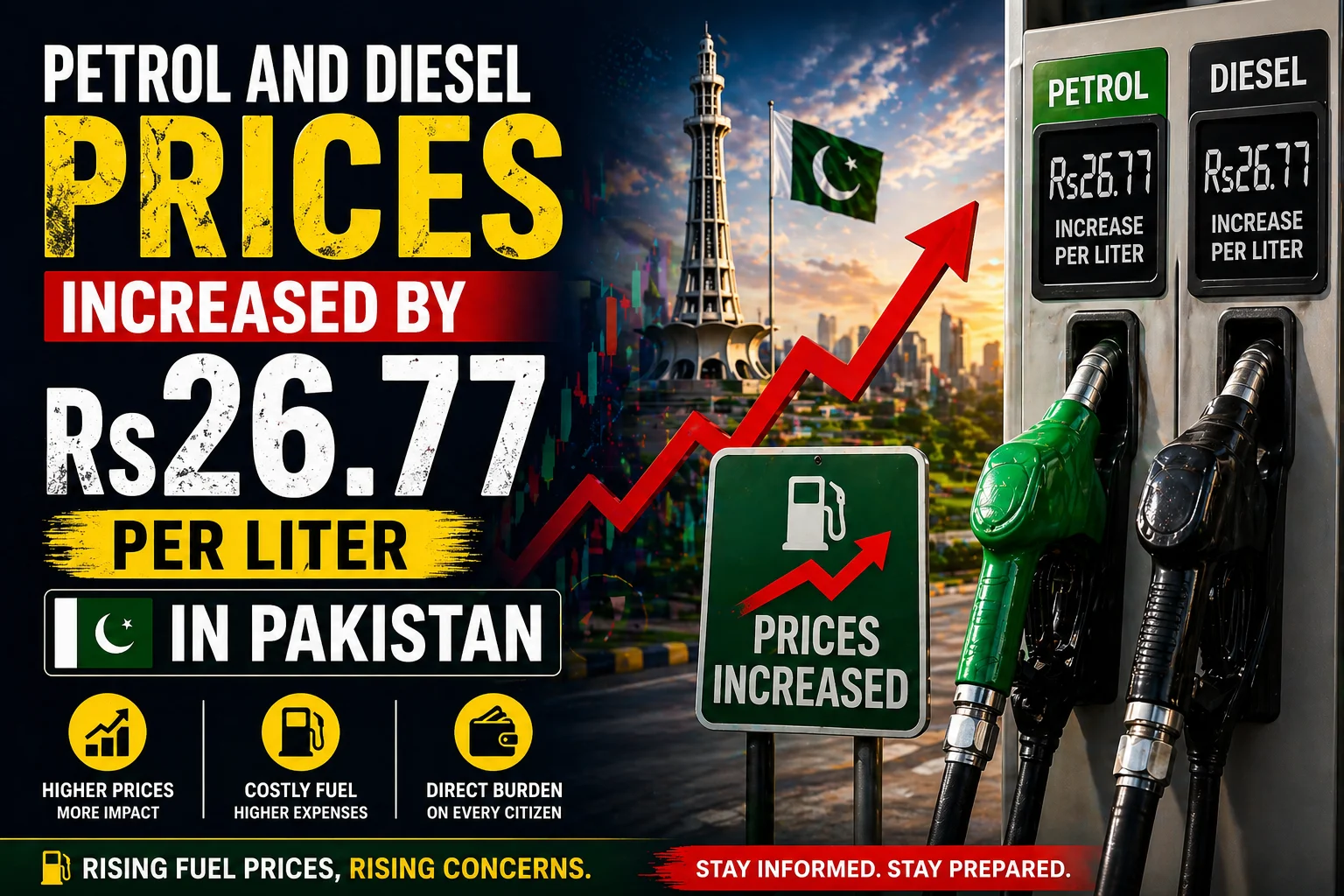

The latest petrol price increase in Pakistan has delivered a severe blow to consumers nationwide, with the government announcing a staggering Rs26.77 per liter hike on Friday. Following this increase, petrol prices now stand at Rs393.35 per liter, while high-speed diesel has reached Rs380.19 per liter. These adjustments represent a 7.3% increase for petrol and 7.5% for diesel over existing rates.
For those wondering how much petrol price increase in Pakistan impacts daily life, the answer is clear: transportation costs, logistics, and overall inflation are expected to surge, potentially raising prices of essential goods and services across the country. We examine the details behind this fuel price hike, its underlying causes, and the widespread economic consequences facing Pakistani households and businesses.
Want to stay updated with the latest news, online earning tips, and trending opportunities in Pakistan? Explore more helpful guides on ogpakistan.pk and stay ahead.
Government Announces Rs27 Per Liter Fuel Price Hike
When Petrol Price Increase in Pakistan Was Implemented
Prime Minister Shehbaz Sharif approved the fuel price adjustment on Friday, April 24, 2026, with the Petroleum Division issuing an official notification the same day. The new rates became effective from April 25, 2026, applying to fuel purchases for one week ending May 1. This timing caught consumers by surprise, as petroleum officials had estimated diesel prices would decrease by around Rs25 per liter and petrol by Rs6 per liter as of April 23. Instead, the government moved in the opposite direction, implementing immediate increases with no advance warning period.
New Petrol and Diesel Rates Effective Nationwide
Following the Prime Minister’s approval, petrol prices were set at Rs393.35 per liter under the revised structure. High-speed diesel was fixed at Rs380.19 per liter for the same period. The government imposed these rates across all provinces and territories, making them applicable at ex-depot pricing levels. Petroleum Division officials confirmed that international petroleum rates remained broadly stable during this period, indicating the price adjustment stemmed primarily from domestic policy decisions rather than global market fluctuations. The Ministry of Energy formally communicated these rates through its notification system, ensuring uniform implementation at fuel stations nationwide.
Comparison with Previous Pricing Structure
Petrol prices jumped from Rs366.58 per liter to Rs393.35, marking an increase of Rs26.77. This represented a 7.3% rise over existing rates. High-speed diesel climbed from Rs353.42 per liter to Rs380.19, reflecting an identical Rs26.77 increase. The diesel hike translated to a 7.5% jump. These adjustments came after diesel had previously dropped from a peak of Rs520.35 on April 10, when the Prime Minister removed the petroleum levy for two weeks. In the previous weekly review, diesel had been reduced by Rs32.12 per liter while petrol prices remained unchanged. Accordingly, the latest hike reversed the brief relief consumers had experienced just days earlier.
How Much Petrol Price Increase in Pakistan: Breaking Down the Numbers
Petrol Jumps to Rs393.35 Per Liter
Petrol prices moved notably close to the Rs400 per liter threshold, a psychological barrier that signals mounting pressure on household budgets. The Rs26.77 increase pushed rates from Rs366.58 to Rs393.35, bringing fuel costs to levels that transform economy considerations from preference to necessity for vehicle owners.
High-Speed Diesel Reaches Rs380.19
High-speed diesel experienced an identical increase in absolute terms, climbing by Rs26.77 per liter. The new rate of Rs380.19 represents critical implications beyond personal vehicles, as diesel powers busses, trucks, agricultural machinery, and commercial transport infrastructure. By comparison, diesel pricing carries particular significance because freight and transport costs typically follow diesel movements, potentially triggering price adjustments across daily essentials, public transport fares, and intercity travel.
Other Petroleum Products: Kerosene and Light Diesel Changes
In contrast to petrol and diesel hikes, kerosene oil saw a substantial reduction of Rs63.6 per liter, bringing prices down to Rs365. Similarly, light diesel oil dropped by Rs29 per liter to Rs270. These decreases followed declining global oil benchmarks, demonstrating that international market conditions influenced certain petroleum products even as petrol and diesel moved upward.
Tax Component Analysis
The petroleum levy emerged as the driving force behind petrol price adjustments, with the government raising it to Rs107.4 per liter. Total taxation on petrol now amounts to roughly Rs134 per liter, incorporating petroleum levy, customs duty, and climate-related charges. Diesel carries substantially lower levy exposure at approximately Rs36 per liter, including customs duty and climate support components. Petroleum Division officials confirmed that international petroleum rates remained broadly stable, indicating the increase stemmed primarily from higher domestic levies rather than global market fluctuations.
Why Did Pakistan Impose This Fuel Price Hike?
International Market Conditions vs Reality
Petroleum Division officials revealed a striking contradiction in the government’s justification for this petrol price increase in Pakistan. In reality, international petrol prices remained stable during the review period, with no change in global market rates. The officials confirmed that domestic tax increases drove the hike, not international market fluctuations. However, Petroleum Minister Ali Pervaiz Malik presented a different narrative, claiming oil prices were increasing in global markets due to regional tensions. This discrepancy between official statements and ground reality raises questions about the transparency of fuel pricing decisions.
Petroleum Levy Increases to Rs107.4
The petroleum levy jumped to Rs107.4 per liter on petrol, becoming the primary driver of price escalation. Prime Minister Shehbaz chose to recover taxes meant for diesel consumers from petrol users instead, a policy he had previously implemented and reversed following public backlash. The government collected over Rs1.2 trillion in petroleum levy during the first nine months of the fiscal year, reaching 82% of the annual target of Rs1.468 trillion. Moreover, the climate support levy will increase by an additional Rs2.5 per liter on both products from July 1, pushing the levy to Rs5 per liter.
IMF Agreement Pressures Government Decision
The International Monetary Fund demanded the government charge Rs80 per liter tax on both diesel and petrol. Instead of introducing petroleum levy on high-speed diesel, the government increased the tax on petrol to Rs107.4 per liter as a first step. An additional Rs53 per liter tax increase remains pending to meet IMF requirements. The IMF is expected to approve the fourth loan tranche and third review of the Rs1,943.77 billion bailout package in the first week of May.
Regional Tensions Cited as Justification
The minister cited regional tensions and agreements with global partners as reasons for transferring the burden of rising oil prices to consumers. Due to pressure from these factors, the government framed the decision as unavoidable despite stable international prices.
Impact of Rs27 Increase on Pakistani Consumers
Transportation Costs Rise Across Major Cities
High-speed diesel powers busses, trucks, and trains across Pakistan’s transport infrastructure. When diesel prices climb, transport companies face higher operating expenses that get passed directly to passengers and consumers. A simple commute to work, school, or market becomes more expensive for millions of people relying on public transportation. Private vehicle owners, including motorbike and rickshaw users, experience direct budget strain. Families must allocate more money to fuel, leaving less for food, healthcare, and education. Railway operations face similar pressures, as locomotives depend heavily on diesel fuel. Accordingly, transportation costs for goods and passengers using trains increase, affecting industries that rely on railways for moving raw materials and finished products.
Agriculture Sector Faces Diesel Price Burden
Farmers bear the brunt of diesel price hikes as agricultural machines run on this fuel. Tractors, combine harvesters, and irrigation pumps all require diesel to operate. The increased operating costs directly impact production expenses, which in turn push up prices for agricultural goods. Vegetables, grains, and fruits become more expensive as production costs rise. This inflationary pressure on food items reduces purchasing power across consumer segments.
Middle and Lower Income Groups Hit Hardest
A survey conducted by Gallup Pakistan in 2020 found that 57% of respondents decreased spending on non-essential goods and services due to rising oil prices, while 43% reduced spending on essential goods and services such as food and healthcare. For households with limited incomes, every extra rupee spent on fuel represents a significant financial burden. Many families have abandoned normal activities such as eating out at restaurants or taking vacations, instead opting for cheaper options like home-cooked meals.
Inflation Concerns Intensify Nationwide
Higher fuel costs make everyday essentials more expensive, increasing inflation levels within the economy. This inflationary pressure affects everyone, especially the poor, who are most vulnerable to price hikes. In fact, Pakistan recorded some of its highest fuel prices in 2024, with inflation crossing 27 percent, showing how deeply fuel costs affect the broader economy. For businesses, rising oil prices lead to higher input costs, which can result in lower profit margins and ultimately slower growth.
Conclusion
The Rs27 petrol price increase in Pakistan has created severe financial strain nationwide. Above all, we’ve seen how petroleum levy hikes to Rs107.4 per liter, driven by IMF agreements rather than global market conditions, directly burden consumers. Transportation costs, agricultural expenses, and inflation continue rising, affecting middle and lower income households most severely. With this in mind, Pakistani families face difficult choices between essential expenses as fuel prices approach Rs400 per liter.
Don’t miss out on valuable updates and opportunities. Visit ogpakistan.pk today and start learning, growing, and earning with the right guidance.
FAQs
Q1. What is the new petrol price in Pakistan after the recent increase?
Following the latest hike, petrol prices now stand at Rs393.35 per liter, representing an increase of Rs26.77 from the previous rate of Rs366.58 per liter. This marks a 7.3% rise in petrol costs.
Q2. When did the Rs27 fuel price increase take effect?
The fuel price increase was approved on April 24, 2026, and became effective from April 25, 2026. The new rates apply to fuel purchases for one week ending May 1, 2026.
Q3. Why did the government increase fuel prices despite stable international oil rates?
The primary driver was the increase in petroleum levy to Rs107.4 per liter, not international market fluctuations. The government raised domestic taxes to meet IMF agreement requirements, which demand Rs80 per liter tax on both diesel and petrol.
Q4. How does the diesel price hike affect everyday consumers?
High-speed diesel now costs Rs380.19 per liter, directly impacting transportation costs for busses, trucks, and trains. This increase raises public transport fares, delivery costs, and agricultural expenses, ultimately making everyday essentials more expensive for all consumers.
Q5. Which income groups are most affected by this fuel price increase?
Middle and lower income groups face the hardest impact, as they must allocate more of their limited budgets to fuel and transportation. A 2020 survey found that 57% of respondents decreased spending on non-essential goods, while 43% reduced spending on essential items like food and healthcare due to rising oil prices.