


Introduction
The world best vertically integrated company controls every stage of its supply chain, from raw materials to final retail. Vertical integration helps companies manage production and delivery smoothly, and as a result, many famous brands follow this business model today.
Also Explore: “Difference Between Job and Network Marketing: Which Is Better?“
We’ve analysed the vertically integrated company in the world that excels at this strategy, in particular examining how businesses like Netflix, Tesla, and Forever Living Products maintain complete control over their operations. In this article, we’ll explore nine industry leaders that demonstrate why vertical integration remains a powerful competitive advantage in 2026.
List of 9 World Best Vertically Integrated Companies
Here’s the 9 world best vertically integrated companies in 2026
- Apple
- Netflix
- Tesla
- Amazon
- Forever Living Products
- ExxonMobil
- Zara (Inditex)
- IKEA
- Luxottica (Essilor Luxottica)
Apple: Technology’s Vertical Integration Pioneer

Image Source: TidBITS
Apple’s Integrated Ecosystem
Apple owns and manages multiple stages of its supply chain, from chip design to retail operations. CEO Tim Cook explained at a Goldman Sachs conference that Apple distinguishes itself through expertise in software, hardware, and services, stating that competitors are “trying desperately to catch up and they are finding it’s not so easy to do”. The company’s brand value reached PKR 97743.97 billion, with revenue surging from PKR 2221.45 billion in 2004 to PKR 72197.25 billion in 2019.
Apple ID serves as the central authentication mechanism connecting all devices and services. A single account accesses the App Store, subscriptions, Apple Pay, Find My, FaceTime, and iCloud storage. This unified identity ties purchases, settings, messages, and devices into one relationship that Apple manages completely.
Features like Handoff, AirDrop, and Universal Clipboard work seamlessly because Apple controls both hardware and software development. Handoff lets users start tasks on one device and continue on another. Universal Clipboard copies content on iPhone for immediate pasting on Mac or iPad. These continuity features reward owning multiple Apple products and create stronger reasons to stay within the ecosystem.
Controlling Hardware and Software
Apple’s shift to custom silicon represents a prime example of vertical integration strategy. The M1 and M2 chips eliminate reliance on Intel, ensuring better optimization for macOS and iOS devices. While Apple doesn’t manufacture most components, it exercises significant control through exclusive agreements with suppliers like TSMC for chips and Foxconn for assembly.
The company designs its own power management circuits, which extend battery life for iPhones and iPads. Apple acquired assets from Dialog Semiconductor for PKR 166609.03 million, including 300 employees and patents. Bringing chip development in-house reduces overhead costs and enables more efficient solutions for products like AirPods and Apple Watch.
Controlling the operating systems allows Apple to push new features and security patches directly, without waiting on carriers or device makers. Fewer versions exist in the wild, fixes arrive faster, and mainstream users experience smoother performance.
Retail Strategy and Customer Experience
Apple Stores remove friction at the exact moment customers decide whether premium products feel worth the investment. Hands-on demos let people experience screens, cameras, speakers, and accessories in controlled environments with trained staff. This experience reduces uncertainty, the enemy of premium pricing. The in-store experience contributes significantly to Apple’s 91% customer satisfaction rate.
Stores combine sales and service. Genius Bar appointments, diagnostics, and repair flows keep customers from bouncing to third parties who might deliver worse experiences. Owning primary customer touchpoints means Apple maintains consistent pricing, presents products in curated settings, and avoids price competition in crowded third-party channels.
The App Store recorded more than PKR 2776.82 billion in sales in 2013. In December alone, customers spent PKR 277.68 billion on nearly 3 billion downloads, making it the most successful month in App Store history.
Key Success Factors
Vertical integration leads to cost control and higher profit margins. By designing components and selling directly to consumers, Apple reduces expenses from third-party licensing and retail markups. The company retains more revenue per device sold.
Integration creates ecosystem lock-in. iCloud, AirDrop, and Handoff work effortlessly across devices, making switching to competitors harder. This flywheel works simply: more devices lead to smoother experiences, which drive more service usage, creating stronger reasons to buy the next device.
Apple maintains greater control over suppliers, helping mitigate risks like component shortages and production delays. The company strategically diversifies suppliers to maintain stability while designing its own hardware and software to implement new technologies quickly without waiting for third-party advancements.
Netflix: Entertainment Content to Distribution

Image Source: Netflix
From DVD Rentals to Content Creation
Reed Hastings and Marc Randolph founded Netflix in 1997 as a DVD-by-mail service, directly challenging Blockbuster’s physical rental stores. The subscription model introduced in 1999 allowed customers to rent multiple DVDs for a fixed monthly fee, eliminating late fees and store visits. By the early 2000s, Netflix had established distribution centers across the United States to ensure quick delivery times.
The shift to streaming arrived in 2007 when Netflix launched its internet-based service, initially offering a limited selection on personal computers. This marked the beginning of Netflix’s transformation from content distributor to a vertically integrated company in the world. The release of House of Cards in 2013 represented the first major original series, proving Netflix could compete with traditional television networks. By 2020, the company spent over PKR 4720.59 billion annually on content production and released over 1,500 hours of original content.
Vertical Integration in Streaming
Rising licensing costs drove Netflix toward content ownership. Traditional streaming rights increased in price, consequently pushing the company to produce original content rather than rely solely on licensed material. This strategic shift granted Netflix greater control over intellectual property and content quality.
Netflix invests PKR 5553.63 billion in content creation annually, producing hundreds of original titles each year. The company operates in over 190 countries, supporting 200+ local languages for subtitles and dubbing. In fact, content spending reached over PKR 4720.59 billion in 2021, surpassing traditional studios like Disney and Warner Bros. This level of investment demands constant revenue growth, specifically through subscriber expansion and retention.
Production and Distribution Control
Netflix developed its own Content Delivery Network called Open Connect in 2011, planting over 17,000 servers in 158 countries. This technical infrastructure stores content closer to viewers, reducing lag and eliminating reliance on third-party services like Akamai. ISPs using Netflix’s Open Connect Appliances have saved PKR 347.10 billion as of 2021.
The company maintains approximately 15,000 titles in its global catalog, with 70% consisting of licensed content and 30% original productions. This balanced inventory composition mirrors successful retail strategies. Netflix processes over 15 billion hours of viewing data monthly to refine distribution approaches, with 70% of viewers deciding what to watch based on recommendation systems.
Competitive Advantages
Morgan Stanley analysts identified Netflix’s structural competitive advantages: developing international content, maintaining a deep library across genres, and benefiting from vertical integration in original programming. The company tailors content for specific demographic clusters and geographic regions through sophisticated market segmentation.
Netflix’s own CDN infrastructure maintains an operating margin of about 17.5%, significantly ahead of competitors. The platform operates across multiple distribution touchpoints simultaneously, from mobile apps to smart TV interfaces, generating annual revenues exceeding PKR 8608.13 billion. Original content drives subscriber retention, with viewers more likely to remain subscribed after watching Netflix Originals compared to licensed content.
Tesla: Revolutionizing Automotive Manufacturing
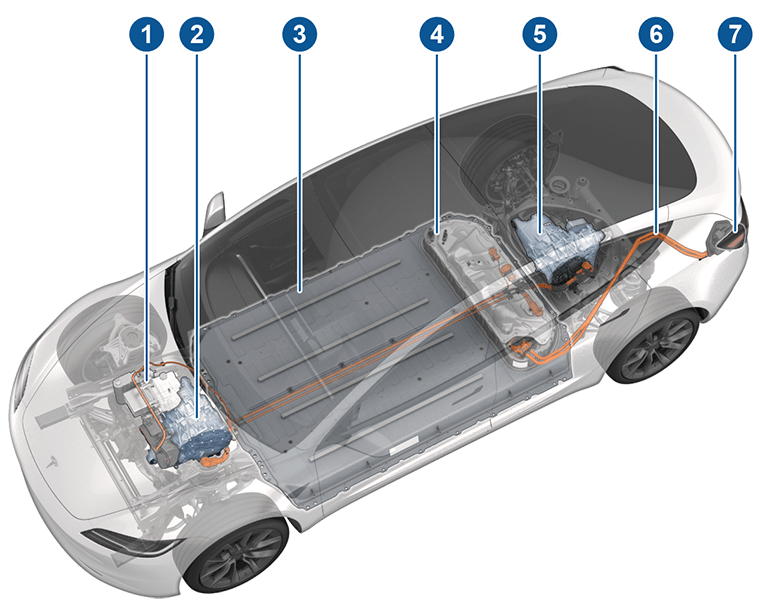
Image Source: Tesla
Tesla controls approximately 80% of its supply chain, making it one of the most vertically integrated companies in the automotive sector. This depth of integration spans raw material sourcing, component manufacturing, vehicle assembly, sales operations, and charging infrastructure.
Battery Production and Control
Tesla’s lithium refinery in Robstown, Texas began operations in January 2026, becoming the first spodumene-to-lithium-hydroxide refinery in North America. The facility targets 30 GWh of annual lithium refining capacity using an acid-free route that skips intermediate steps normally routed through China. This project went from groundbreaking in May 2023 to production in under three years.
The company produced its 100 millionth 4680 battery cell by September 2024. By the end of that year, Tesla’s in-house 4680 became its lowest-cost cell per kilowatt-hour, beating suppliers including Panasonic and LG Energy Solution. The 4680 cells feature larger dimensions (46mm diameter, 80mm length) compared to previous 2170 cells, with fewer parts requiring less assembly work.
At Giga Texas, Tesla operates a cathode manufacturing facility with approximately 10 GWh capacity. Cathodes account for more than 35% of total cell cost, making in-house production a significant cost control measure. Correspondingly, Tesla built an LFP cell factory at Gigafactory Nevada with roughly 7 GWh of initial annual capacity using acquired CATL equipment.
Direct-to-Consumer Sales Model
Tesla bypasses traditional dealership networks, selling vehicles directly through its website and 1,359 company-owned locations worldwide as of the end of 2024. This model eliminates dealership costs and gives Tesla complete control over customer interactions from ordering to after-sales service.
The direct approach keeps selling, general, and administrative costs significantly lower than competitors. Ford’s SG&A costs for 2023 were almost four times higher than Tesla’s, even though Ford’s operations were only about 50% larger. Tesla customers can customize and order vehicles online, simplifying the buying process and allowing the company to align production with actual demand.
Charging Infrastructure Ownership
Tesla operates a network of approximately 7,900 Supercharger stations with over 75,000 connectors as of November 2025. The network delivered 6.7 TWh of energy in 2025, exceeding the combined output of all other fast chargers outside China. Superchargers account for 99% of fast charging by Tesla drivers in North America and 70% in the Europe, Middle East, and Africa region.
The company reports over 10 sessions per stall per day at U.S. Supercharger sites, with 2.3x higher utilization than third-party chargers in Europe. In September 2025, Tesla opened its first complete V4 Supercharger station in Redwood City, California, supporting charging up to 500 kW for passenger vehicles.
Supply Chain Mastery
Tesla maintains direct partnerships with mining companies for raw materials. In 2020, the company signed a five-year deal with Piedmont Lithium to supply spodumene concentrate sourced in the U.S.. These direct partnerships bypass traditional supply chain markups, helping reduce battery costs from PKR 63866.80/kWh in 2013 to under PKR 27768.17/kWh in recent years.
The vertical integration strategy proved valuable during the global semiconductor shortage. Tesla redesigned its software to support alternative chips, maintaining production while competitors faced halts. In fact, Tesla reported an 87% increase in vehicle production in 2021, reaching 308,000 vehicles.
Amazon: E-Commerce to Everything

Image Source: Amazon Supply Chain
Amazon’s supply chain mastery extends from website hosting to final-mile delivery, creating an operational scope unmatched among vertically integrated companies worldwide. The company transformed from an online bookstore into a self-sufficient logistics operator that now handles two-thirds of its own shipments in the United States.
Also Explore: “17 Best Books to Give as Wedding Gifts (Top Picks for Couples)“
Fulfillment and Logistics Network
Amazon operates over hundreds of fulfillment centers strategically positioned near major urban hubs to enable same-day or next-day deliveries. The company deployed over 1 million robots, including Sequoia and Blue Jay systems, which automate truck unloading and shelving to process inventory up to 75% faster. This robotic infrastructure reduces operational bottlenecks while maintaining high throughput during peak demand periods.
The logistics network includes a proprietary fleet of 85+ planes and over 40,000 Rivian electric vans. By owning air cargo and last-mile delivery assets, Amazon bypasses port bottlenecks and third-party delivery delays that burden competitors. Capital investments in logistics operations increased by 80% in 2021, reflecting the company’s commitment to becoming its own end-to-end logistics operator.
Programs like Fulfillment by Amazon allow third-party sellers to store products in Amazon’s warehouses, leveraging the company’s packing and shipping infrastructure for Prime-ready deliveries. Multi-Channel Fulfillment extends this capability to non-Amazon sales channels, enabling businesses to manage omnichannel orders through a unified platform.
AWS and Cloud Infrastructure
Amazon Web Services started as a way to monetize the company’s internal IT infrastructure and grew into a PKR 4831.66 billion revenue business in 2017. AWS owns 34% market share in cloud computing, with its largest competitor Microsoft holding just 11%. The service provides on-demand cloud platforms that power Amazon.com itself alongside millions of external customers.
Private Label Products
Amazon expanded its private label portfolio to over 100 different brands, including inconspicuous names like Presto!, Mae, Goodthreads, and Mama Bear alongside Amazon Basics and Amazon Essentials. A field experiment hiding Amazon brands revealed that removing these products reduces consumer welfare by 5.5 percent, as some consumers genuinely prefer them. The company strategically uses obvious brand names for value-oriented products while deploying subtle names like Society New York and Rivet for fashion and decor markets.
Vertical Integration Across Industries
Amazon’s infrastructure spans multiple touchpoints: Amazon.com hosted on AWS, top products from private labels, package storage through fulfillment services, robotics-powered handling via Kiva Systems, Amazon Lockers for pickup, proprietary trucks for delivery, Whole Foods for returns, and Amazon Pay for transactions. This comprehensive ecosystem caters to millions of customers worldwide while setting new standards for operational efficiency across retail, cloud computing, and logistics industries.
Forever Living Products: World’s Best Vertically Integrated Company in Wellness

Image Source: Amazon.com
Forever Living Products: World’s Best Vertically Integrated Company in Wellness
Aloe Vera Farming to Consumer
Forever Living Products positions itself as the world’s largest grower, manufacturer, and distributor of aloe products, managing operations from cultivation through final consumer delivery. Rex Maughan founded the company in 1978 in Tempe, Arizona, building a multi-level marketing enterprise that reported revenue of PKR 1110.73 billion in 2021 with a network of 9.3 million distributors. By the 1990s, Maughan had acquired Aloe Vera of America, a Texas-based company that previously supplied raw materials, bringing aloe cultivation and processing completely under Forever Living’s control.
The company operates across more than 165 countries as of 2018, selling a product line that includes deodorants, toothpaste, laundry detergent, and approximately three dozen other items, nearly all containing aloe vera extract. This farm-to-consumer model eliminates intermediaries between aloe cultivation and finished products reaching distributors.
Quality Control Through Integration
Aloe gel extraction happens by hand, preserving the plant’s natural properties through manual processing rather than industrial machinery. This hands-on approach maintains quality standards at the source, giving Forever Living direct oversight of raw material preparation. Every product undergoes an extensive qualification process before reaching distribution channels, ensuring consistency across the entire catalog.
Global Distribution Network
Forever Direct serves as the regional distribution center for Europe, the Middle East, and Africa, shipping approximately 1,500,000 parcels yearly to distributors in the Benelux region, Germany, United Kingdom, Austria, France, and Scandinavia. The company delivers products to more than 100 countries through this European hub alone. In 2010, Forever Living reported unaudited revenue of PKR 472.06 billion alongside its network of 9.3 million distributors, demonstrating substantial growth to the PKR 1110.73 billion achieved by 2021.
Plant to Product Process
The basis for Forever Living’s 350-product range starts with the aloe vera plant, which the company grows, harvests, and processes through its vertically integrated operations. Products span personal care, household goods, and nutritional supplements. Integration from plant cultivation through manufacturing, packaging, and distribution enables the company to maintain control over product formulation and delivery timelines without depending on external suppliers or retail chains.
ExxonMobil: Oil and Gas Integration

Image Source: ExxonMobil
ExxonMobil stands as the largest non-government-owned company in the international energy industry, producing about 3% of the world’s oil and 2% of the world’s energy. The company maintains vertical integration across the entire oil and gas industry, alongside its chemicals division that produces plastic, synthetic rubber, and other chemical products.
Exploration to Retail Operations
Upstream operations span 40 countries, with ExxonMobil producing approximately 4 million oil-equivalent barrels of net oil and natural gas every day. The upstream division accounts for roughly 70% of the company’s revenue, making it the dominant source of cash flow. In the United States, petroleum exploration and production concentrate in the Permian Basin, Bakken Formation, Woodford Shale, Caney Shale, and the Gulf of Mexico. The company realized a 35% increase in year-over-year production from Permian Basin operations during 2020, with projections to recover up to 10 billion oil-equivalent barrels from that region.
Natural gas activities operate through XTO Energy subsidiary, developing resources in Marcellus Shale, Utica Shale, Haynesville Shale, Barnett Shale, and Fayetteville Shale. Operations off the coast of Guyana are projected to yield more than 750,000 barrels of oil per year by 2026.
Refining and Processing Control
ExxonMobil operates 21 refineries worldwide, with approximately 80% of refining capacity integrated with chemical or lube basestocks. Global refining capacity reaches 4.6 million barrels per day, with the United States producing about 1.77 million barrels daily. The Beaumont Refinery represents the company’s largest facility overall, while the Baytown Refinery in Texas stands as the second largest in the United States.
Transportation Infrastructure
An extensive distribution and supply chain infrastructure includes pipelines, terminals, refineries, storage facilities, and a network of fuel stations. This infrastructure enables efficient transportation and distribution of products to customers worldwide.
Market Dominance Through Integration
ExxonMobil markets products globally under Exxon, Mobil, and Esso brands through more than 21,000 retail stations. The company sells approximately 5 million barrels of petroleum-based products per day. In the United States, stations operate in 46 states, with Mobil serving as the primary retail gasoline brand in California, Florida, New York, New England, the Great Lakes, and the Midwest. Outside the United States, Esso operates in 14 countries while Mobil operates in 29 countries and regions.
Zara (Inditex): Fast Fashion Supply Chain

Image Source: Context News
Zara (Inditex): Fast Fashion Supply Chain
Design to Store Integration
Zara delivers new designs in approximately 15 days, while traditional fashion brands require four to six months. The company changes clothing designs every two weeks on average, compared to competitors who refresh every two to three months. Design teams at headquarters in Arteixo, Spain employ over 300 designers and product specialists organized by product categories. Agents continuously scout fashion trends at clubs and social gatherings, quickly sending sketches to garment designers at the centralized facility.
The company carries about 11,000 distinct items per year across thousands of stores worldwide, significantly more than competitors who stock 2,000 to 4,000 items annually. This variety stems from producing small batches instead of massive quantities, creating engineered scarcity that pushes shoppers to buy immediately.
Manufacturing Control
Zara produces approximately 50-60% of its clothing in proximity to headquarters in Spain, Portugal, Morocco, and Turkey. This geographic concentration enables rapid communication between design, production, and distribution functions. The company owns fabric dyeing, cutting, and processing equipment, providing added control and flexibility to adopt new trends on demand. While Zara outsources labor-intensive sewing to nearby suppliers, it retains ownership of processes that add organizational capabilities.
Rapid Response System
Store managers track sales patterns and send real-time data to designers twice weekly. Stores place orders on this same schedule, driving factory scheduling and making forecasts remarkably accurate. Zara achieves 12 inventory turns per year compared to 3-4 for competitors. The company sells 85 percent of items at full price versus the industry average of 60 percent. In Spain, customers visit Zara stores 17 times per year on average compared to 3 times for competitors.
Retail Distribution Network
The Cube, Zara’s highly automated distribution center, serves as the heart of the supply chain. Garments reach stores worldwide within days: Europe receives deliveries in 24 hours, China and the United States in 48 hours, and Japan in 72 hours. Items arrive on hangers with tags and prices attached, moving directly from delivery trucks to sales floors. RFID technology keeps inventory visible by article, size, and location, enabling store-based fulfillment at scale.
IKEA: Furniture Design to Retail

Image Source: IKEA
IKEA: Furniture Design to Retail
Forest Management and Raw Materials
IKEA owns more than 613,000 acres of forestland across multiple continents, positioning itself among the world’s largest private forest holders. The company’s forest acquisitions include 83,000 acres in Romania, 25,000 acres in Alabama, and additional holdings in the Baltics and Europe. By owning forests, IKEA secures access to raw materials, stabilizes input costs, and applies strict forest stewardship standards. This ownership addresses a specific business problem: by the early 2000s, IKEA’s demand for wood reached 1% of the global commercial timber market.
Manufacturing and Design Control
IKEA Industry operates factories producing high-volume items including tables, shelves, and particleboard furniture. The Virginia factory reduces transport costs, minimizes currency risk, and guarantees faster delivery for the American market. Design teams optimize products specifically for manufacturability and logistics through clever engineering tricks like honeycomb cardboard cores, interlocking joints, and modular components. Circular design principles guide product development, ensuring items can be reused, repaired, refurbished, and recycled.
Logistics and Warehousing
IKEA’s flat-packaging strategy maximizes storage efficiency and cuts shipping costs by allowing more units per truck. The company uses a hub-and-spoke distribution model with automated Storage and Retrieval Systems moving products without manual handling. Cross-docking accelerates goods flow by immediately transferring items from incoming to outgoing trucks with minimal storage time. IKEA acquired TaskRabbit to control home delivery and assembly services, bringing the final mile into its supply promise.
Retail Store Experience
IKEA operates company-owned retail outlets that double as warehouses, where customers self-collect flat packs. Stores feature maze-like layouts, immersive room displays, and Swedish meatballs that engage all five senses. The company now blends physical stores with augmented reality, AI-powered recommendations, and indoor GPS navigation via smartphones. City-center locations complement traditional suburban stores, with IKEA Paris La Madeleine representing one of the first urban formats.
Luxottica: Eyewear Industry Dominance

Image Source: EssilorLuxottica
Manufacturing to Retail Integration
Leonardo Del Vecchio founded Luxottica in 1961 in Agordo, Italy, initially manufacturing components for other eyewear brands. The company operates 600+ factories and 128 distribution centers worldwide. In 2018, Luxottica merged with Essilor to form EssilorLuxottica, creating the only fully integrated eyewear company controlling design, manufacturing, distribution, and retail. This merger, valued at PKR 8885.82 billion, combined frame production with lens manufacturing expertise.
Brand Portfolio Control
EssilorLuxottica manages a portfolio of 150 brands, including owned labels Ray-Ban, Oakley, Persol, and Oliver Peoples. The company acquired Ray-Ban in 1999 for PKR 177716.30 million and Oakley in 2007 for PKR 583.13 billion. Additionally, licensing agreements grant exclusive manufacturing rights for Chanel, Prada, Armani, Burberry, Versace, and Dolce & Gabbana eyewear.
Optical Retail Chains
The company operates 17,500+ retail locations globally, with Sunglass Hut commanding 3,131 stores, LensCrafters 1,098 locations, and Pearle Vision 549 outlets. LensCrafters holds 14.8% U.S. market share, while Sunglass Hut captures 9.5%.
Market Share and Influence
EssilorLuxottica controls at least 60% of the U.S. eyewear market and maintains 42% market share in corrective lenses globally. The company produces over 1 billion glasses annually, generating €26.51 billion in revenue for 2024. Manufacturing costs range between PKR 6942.04 and PKR 13884.09, yet products retail for PKR 111072.69 to PKR 138840.86.
Comparison Table: 9 World Best Vertically Integrated Companies (2026)
| Company | Industry | Core Integration Strategy | Key Operations/Facilities | Market Position/Scale | Revenue/Financial Data | Primary Competitive Advantage |
|---|---|---|---|---|---|---|
| Apple | Technology | Chip design to retail operations; controls hardware, software, and services | Custom M1/M2 chips, Apple Stores, App Store, acquired Dialog Semiconductor assets | 91% customer satisfaction rate; Brand value PKR 97,743.97 billion | Revenue surged from PKR 2,221.45 billion (2004) to PKR 72,197.25 billion (2019); App Store sales PKR 2,776.82 billion (2013) | Ecosystem lock-in through seamless integration (iCloud, AirDrop, Handoff); cost control and higher profit margins |
| Netflix | Entertainment/Streaming | Content creation to distribution; owns CDN infrastructure | Open Connect CDN with 17,000+ servers in 158 countries; operates in 190+ countries | 200+ local languages supported; 15,000 titles in global catalog (70% licensed, 30% original) | Annual revenues exceeding PKR 8,608.13 billion; content spending PKR 5,553.63 billion annually | 17.5% operating margin from own CDN; 70% of viewers use recommendation systems; structural advantage in international content |
| Tesla | Automotive | Raw materials to charging infrastructure; controls 80% of supply chain | Lithium refinery in Texas (30 GWh capacity), cathode facility at Giga Texas (10 GWh), 1,359 company-owned locations, 7,900 Supercharger stations | 100 millionth 4680 battery cell produced (Sept 2024); 75,000+ charging connectors; delivered 6.7 TWh energy (2025) | SG&A costs significantly lower than Ford (4x less despite Ford being 50% larger) | Battery costs reduced from PKR 63,866.80/kWh (2013) to under PKR 27,768.17/kWh; 87% production increase during chip shortage (2021) |
| Amazon | E-Commerce/Technology | Website hosting to final-mile delivery | Hundreds of fulfillment centers, 1 million+ robots, 85+ planes, 40,000+ Rivian vans, AWS cloud infrastructure | Handles 2/3 of own shipments in US; AWS holds 34% cloud market share | AWS revenue PKR 4,831.66 billion (2017) | End-to-end logistics control; 75% faster inventory processing with robotics; 100+ private label brands |
| Forever Living Products | Wellness/MLM | Aloe vera farming to consumer delivery | Operations in 165+ countries; Forever Direct distribution center (Europe, Middle East, Africa) | Largest grower, manufacturer, and distributor of aloe products; 9.3 million distributors | PKR 1,110.73 billion revenue (2021); grew from PKR 472.06 billion (2010) | Farm-to-consumer model eliminates intermediaries; hand extraction preserves quality; 350-product range |
| ExxonMobil | Oil & Gas | Exploration to retail operations | 21 refineries worldwide, upstream operations in 40 countries, 21,000+ retail stations | Produces 3% of world’s oil, 2% of world’s energy; 4 million oil-equivalent barrels daily | Upstream accounts for ~70% of revenue | 4.6 million barrels/day refining capacity; 80% of refining integrated with chemicals; sells 5 million barrels of petroleum products daily |
| Zara (Inditex) | Fast Fashion | Design to store operations | 300+ designers at Arteixo headquarters; production in Spain, Portugal, Morocco, Turkey; The Cube distribution center | 11,000 distinct items/year vs. competitors’ 2,000-4,000; operates thousands of stores worldwide | Sells 85% at full price vs. industry average 60% | 15-day design-to-store cycle vs. competitors’ 4-6 months; 12 inventory turns/year vs. 3-4 for competitors; RFID-enabled distribution |
| IKEA | Furniture/Retail | Forest management to retail stores | 613,000+ acres of forestland, IKEA Industry factories, company-owned retail outlets, TaskRabbit acquisition | Demand reaches 1% of global commercial timber market; operates globally with hub-and-spoke distribution | Not mentioned | Flat-packaging maximizes efficiency; owns forests for raw material security; automated Storage and Retrieval Systems; controls final-mile delivery |
| Luxottica (EssilorLuxottica) | Eyewear | Manufacturing to retail chains | 600+ factories, 128 distribution centers, 17,500+ retail locations worldwide | Controls 60% of US eyewear market, 42% global corrective lens market; 150 brands managed | €26.51 billion revenue (2024); merger valued at PKR 8,885.82 billion (2018) | Produces 1 billion+ glasses annually; owns Ray-Ban, Oakley; licenses Chanel, Prada, Armani; manufacturing cost PKR 6,942-13,884 vs. retail PKR 111,073-138,841 |
Which Is the World Best Vertically Integrated Company?
The world best vertically integrated company is most commonly considered to be Apple Inc.. It stands out because it controls nearly every part of its value chain, from designing hardware and software to manufacturing chips and selling products through its own retail stores. This high level of control allows Apple to maintain consistent quality, strong brand value, and industry-leading profit margins.
Conclusion
These nine companies undeniably prove that vertical integration remains a powerful competitive strategy in 2026. Each controls critical touchpoints from raw materials through final delivery, specifically enabling cost reduction, quality control, and faster market response. Apple locks customers into ecosystems, Tesla cuts battery costs by 60%, and Zara delivers new designs in 15 days while competitors need months. As a matter of fact, vertical integration isn’t just corporate theory anymore. These market leaders demonstrate exactly how owning your supply chain translates into measurable advantages: higher margins, better customer experiences, and resilience during disruptions. Given these points, vertical integration continues separating industry leaders from followers across every major sector. For More Information Please Visit: OG Pakistan PK
FAQs
Q1. Which is the world best vertically integrated company?
The world best vertically integrated company is most commonly considered to be Apple Inc.. It controls nearly every part of its value chain, including hardware, software, chip manufacturing, and retail, allowing for high quality, strong brand value, and consistent profitability.
Q2. Which industries are expected to experience significant growth in 2026?
Industries combining artificial intelligence with complex real-world applications are seeing strong investor interest in 2026. These include cybersecurity, robotics, defense technology, government technology, and regulated sectors like healthcare and financial services.
Q3. What are the top AI-powered business opportunities to launch in 2026?
Promising AI business ventures for 2026 include AI-driven business idea validation platforms, contract review and risk analysis tools for small and medium businesses, recruiting and candidate matching services for specialized roles, content repurposing engines, and customer support agents tailored for e-commerce.
Q4. Which technology companies are considered the best employers in 2026?
Leading AI research labs and quantitative trading firms rank highest among tech employers in 2026. Top-tier companies include Anthropic, OpenAI, Google DeepMind, xAI, Jane Street, and Citadel, according to industry professionals.
Q5. Which companies are positioned for the strongest AI-driven growth in 2026?
Companies leading AI growth in 2026 span multiple categories: semiconductor manufacturers like Nvidia, Broadcom, AMD, and TSMC; cloud computing platforms including Microsoft, Amazon, and Alphabet; and enterprise software providers such as Palantir, ServiceNow, and Meta.
Q6. How does vertical integration benefit companies like those featured in this article?
Vertical integration allows companies to control their entire supply chain from raw materials to final delivery, resulting in reduced costs, improved quality control, and faster response to market changes. This strategy enables higher profit margins, enhanced customer experiences, and greater resilience during supply chain disruptions.